
 Patient Stories
Ski Bummed
Published August 2026 in Summer 2026
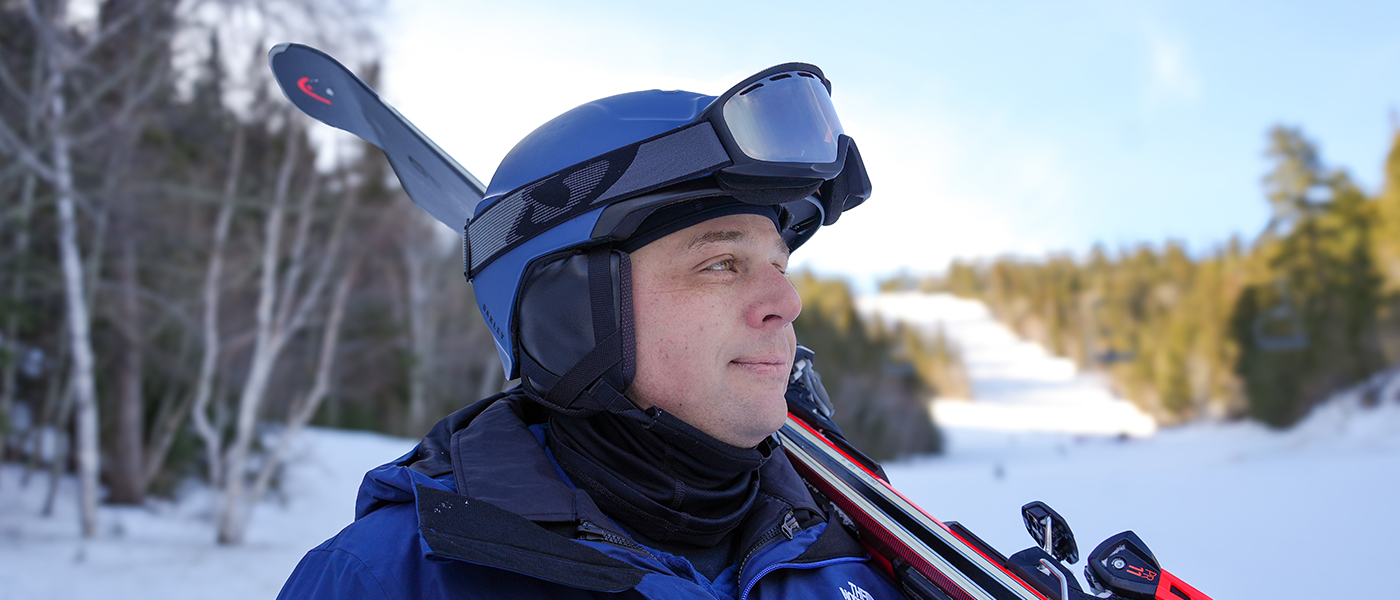
Rapid City local Matt Thompson was a skier from his youth all the way up to middle school. Then, like so many of us do, he fell away from the sport. In 2020, however, he found the time and motivation to get back to the slopes. This led to the purchase of a ski pass at Terry Peak. Skiing was once again a priority in his free time.
As a former Paramedic at Monument Health Lead-Deadwood Hospital, Matt had helped plenty of injured skiers. “That was one of the reasons why I wouldn’t even go skiing,” he recalled, “because I went up to Terry Peak when on calls. I was like, it’s been so long since I’ve been skiing, I’m gonna fall down and break something.”
And now, thanks to his own injury experience, he’s gained a new insight into how an injury ripples through the rest of a person’s life.
Jan. 2, 2025 was a busy day at Terry Peak, just outside of Lead. Maybe the busiest day Matt had ever seen, he recalled, especially on the black diamond difficulty run Ben Hur. Matt, 40, and his dad, Mark Thompson, were skiing their way down to the lodge for lunch while trying to stay clear of the crowd.
“I hit a patch of ice, my skis crossed and I went down. I felt a pop in the left side of my leg and knew something wasn’t right,” said Matt. “I was able to use my pole and disconnect my boot from my ski. I could hardly lift my leg up. Ski patrol was called right away. It took quite a bit of work to get me moved because I was on a very steep spot on the hill.”
Matt had broken a part of the shin bone called the tibial plateau in his left leg and was in a lot of pain. The ski patrol got him down off the slope. Matt then called his dad, who, because he was skiing ahead of Matt, was not aware that the crash had happened.
Now Paramedic Director of Keystone Ambulance, Matt wasn’t concerned at the time about the damage to his leg. More immediate in his mind was controlling the pain. With the ski patrol’s help, he hobbled to Mark’s vehicle. The two then went directly to Lead-Deadwood Hospital’s Emergency Department (ED).
“We got to the hospital and I went straight for X-rays. They got me into the trauma room, which, I’d been a paramedic and worked in that hospital, so I was like, ‘Oh, this isn’t good,’” Matt said. “Within seconds, the provider came in with a printout of my X-ray showing me how severe the fracture was. I needed surgery very soon.”
The staff started IVs, gave Matt pain meds and performed a CAT scan of his leg, which confirmed the need for surgery. They placed Matt in an immobilizer and moved him straight from the CAT scan table into the back of an ambulance bound for Rapid City.
“This was a new one for me. I’ve been in the back as a provider countless times, but never as a patient,” he said.
Within an hour of arriving at Rapid City Hospital (RCH), Matt was in the operating room, where they placed external fixators on his leg — two in the lower leg and two in the upper leg. These were to remain in place for two weeks to help the swelling go down so he could have the actual surgery to repair the fracture.
Matt stayed in RCH the following two nights. Upon discharge, though, he still wasn’t able to go home. Due to the fixators, he was unable to get out of bed — nor do anything else for that matter — without help, so he spent the next two weeks at his parents’ house.
Surgery to repair Matt’s leg took place on Jan. 15.
“When I woke up, the surgeon, Dr. Brady, told me that it was probably one of the most extensive fractures she’s repaired in her career, and it was one of the harder ones that she’s done,” said Matt. “They got everything pinned back together, and I spent another three nights in the hospital.”
The physician, Megan A. Brady, M.D., an Orthopedist with Surgical Affiliates Medical Group, Inc. (SAMGI), provided all of Matt’s surgical and post-operative care. SAMGI is an organization that places surgeons for medical services across the country. The surgeons are medical staff members at RCH where they perform surgery and provide pre-operative and post-operative care.
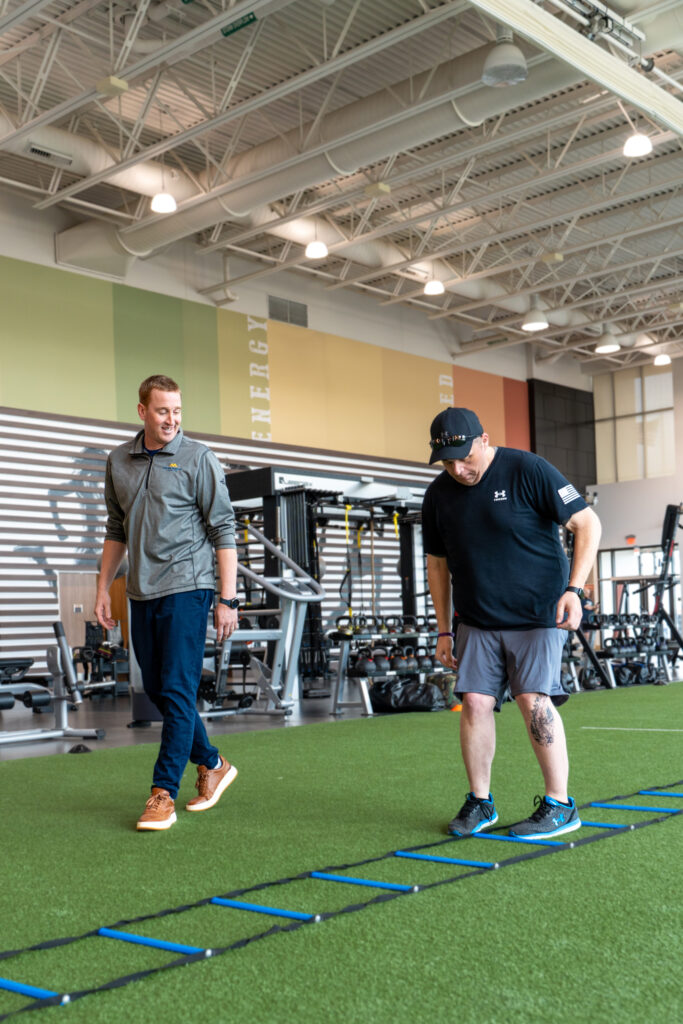
“Matt required three months of non-weight bearing exercises in order for the bone to solidify and grow around those structures to be safe enough to start bearing weight,” said Josh Nebelsick, Physical Therapist at Monument Health Orthopedic & Specialty Hospital, who began working with Matt 8 weeks after surgery. “When he’d gotten his range of motion back, and he’d returned to pretty much full weight bearing with his walking, we worked into higher level, dynamic stuff like jumping, hopping and jogging,” added Bryan Olson, PT. Together they designed rehabilitation exercises that approximated the physical demands of skiing. “Matt had to be able to plant, to rotate and to shift weight, so we tried to simulate those things in a clinical setting in order to give him some confidence to get back to where he needed to be to do what he wanted to do.”
“We’re very fortunate to have the talented surgeons from SAMGI at Rapid City Hospital. SAMGI provides orthopedic surgeons and neurosurgeons that are available at RCH for emergency and hospitalized patients 24/7,” said Bradley Anderson, M.D., FACS, Urologist, Surgeon and Monument Health Executive Medical Director. ”These SAMGI orthopedic surgeons specialize in trauma care, and they complement the other Monument Health orthopedic surgeons who are then able to focus on their patients in the office and those that don’t need emergency procedures. This really improves the patient experience for all.”
Spending the next 12 weeks on non-weight-bearing status meant no ambulance work for Matt. In mid-May, though, he went from crutches to using a cane. I got to the point where I went for physical therapy, rehabilitation and follow up appointments so frequently that my phone would even tell me when I left my house how many minutes it was to Monument Health,” he said with a laugh. “Everything has been great through the whole process. I’ve done every last bit of my care through Monument Health, from the initial Deadwood ER visit all the way through to where I’m at today. With all the different providers I’ve seen, it’s all been great.”
By June, he no longer needed assistance to walk and so returned to his ambulance shifts. From the day of the injury to being back to work was a five-month saga. “One of my first trauma calls when I got back to work was a left leg injury. The patient was in quite a bit of pain. I was able to get the pain under control and say, ‘Having been in your shoes a few months ago, I can tell you, they’ve got an amazing orthopedic and trauma program here. They do a great job.’”
Even after he was back to work, Matt continued with physical therapy to build up his strength and get him back to better than he was before. Matt’s perspective on orthopedic injuries and pain has shifted. “I’ve treated plenty of patients over the years, given a ton of pain meds, and would think, ‘How is that person still in pain with everything I’ve given them?’ And then having had an injury myself, it took quite the cocktail of pain meds to get my pain under control. Because it was miserable to the point that I could hardly sit still,” he said. “To be on the other side, all the way through, it’s been interesting to see just how what seems like just a simple drop off at the hospital isn’t just that simple. There’s a lot more to it. I would have never guessed when I fell that day that it was going to be such a process.”
On Saturday, Dec. 27, 2025, Matt and Mark took to the slopes together for the first time in almost a year. “That first time out was definitely a little nerve-wracking. My legs felt fine. It was just the mental aspect of, ‘Am I really ready to do this again?’ I’ll be a lot more cautious than I had been and stick to the easier stuff for a little bit,” he said.
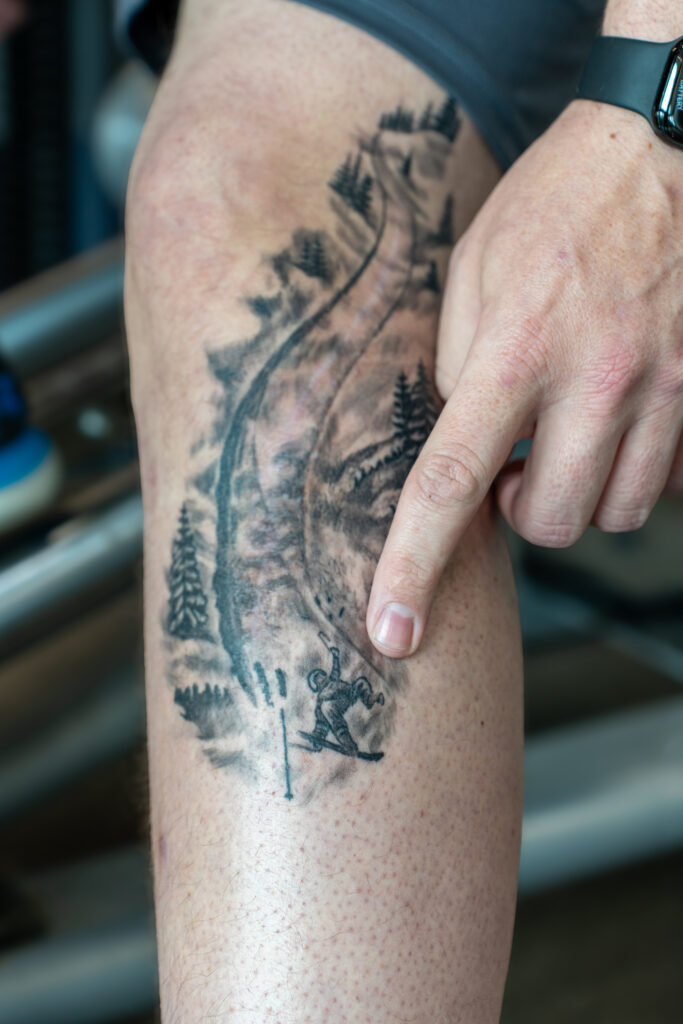
Matt later commemorated his long injury saga by getting a tattoo to cover his scar. It depicts a slope with a skier at the bottom of the run humorously sprawled out on the ground after a crash.
Photos by Erika Bratten-Cianca