
 Patient Stories
Shedding 175 pounds helped improve Rachelle White’s health — and gave her a new lease on life.
According to the CDC, approximately 42% of adults in the U.S. are obese and another 31% are overweight. An estimated 100 million-plus Americans are actively trying to lose weight. Long-term success is rare: most dieters regain weight within five years.
In other words, the weight-loss struggle is real. More than 270,000 patients have bariatric procedures each year, and for them, the procedure isn’t just about losing weight — it’s about changing their lives. Just ask Rachelle White.
Rachelle is a busy woman. Born and raised in South Dakota, she went to college at Black Hills State University and got her master’s degree from National American University. Now she’s the Executive Vice President of the Black Hills Home Builders Association, has her own business — R. White Events — and is an active mother of three. She’s also one of the many people who has wrestled with weight loss.
“I have struggled with my weight for my entire life,” she said. “Even as a kid, I was a little heavy.” Throughout her teen years, and then 20s, she slowly gained weight and could never keep it off. During each pregnancy, she put on more weight and was never able to lose it again, despite her efforts.
“Each time I would do whatever diet was making the rounds at the time, lose 50 pounds, but then gain it all back, plus some,” she recalled. “And I got to a place after my boys were born, that I just needed to do something different.”
Rachelle had never seriously considered bariatric surgery before and was skeptical. However, a friend found success working with General Surgeon David Fromm, M.D., and Rachelle grew more interested. “After watching her journey for six months, and then talking to her about her experience, I was sold,” she said. “The very next thing I did was call Trish in the office and say, ‘I need a consultation.’”

Understanding Obesity
Tricia Hoffman, PA-C, is very familiar with Rachelle’s hesitance. “It’s unfortunate, but a lot of people don’t really understand bariatrics, or why some people struggle with weight loss,” she explained. “This isn’t about being lazy. These patients have tried everything. ‘Eat less, move more,’ doesn’t work for them. Obesity is a disease — genetic, hormonal, complex.”
The approach is different at Monument Health Bariatric and Metabolic Institute. Staff members like Tricia help to explain that while patients bear some responsibility for their weight, there are a number of factors that can make losing weight — and keeping it off — so challenging.
As Tricia — or “Trish,” as her patients call her — explained the science, the different factors at play and the possibilities for change, Rachelle’s perspective began to change. “I felt hope,” she said. “It was the first time in my life where I went into a doctor’s appointment and I wasn’t made to feel like being overweight was entirely my fault.”
That consultation was only the beginning. Contrary to what some might think, bariatric surgery isn’t a quick fix. Rachelle went through a six-month preparation process that involved multiple meetings with Trish, three visits with a dietitian and mandatory consultations with a psychiatrist.
“We’re one of the first centers in the country to fully integrate a clinical psychiatrist into our bariatric program to actively manage mental health and medications that can affect weight loss,” said Dr. Fromm. “We’re not just doing surgery. We’ve built a multidisciplinary clinic where dietitians, obesity medicine doctors, surgeons and our psychiatrist all work together under one roof.”
The Right Procedure for the Right Patient
The bariatric procedure that Dr. Fromm recommended was a biliopancreatic diversion with duodenal switch, or BPD-DS. “This is a lesser-known surgery. It’s really effective for patients with a high BMI and significant weight-related health challenges,” he said. “And Rachelle was a perfect candidate and a great patient. She was more than just compliant — she was committed and ready for a real, long-term change.”
BPD-DS is a two-part surgery that includes a sleeve gastrectomy and a rerouting of the intestines to limit calorie and nutrient absorption. “People think it’s just about limiting your ability to eat,” Dr. Fromm explained. “It’s more than that; it’s about rewiring the body’s hunger signals and hormonal response. Patients tell me they’re just not hungry the way they used to be. That’s a huge win.”
A Purpose-Built Team
Dr. Fromm trained at the University of Iowa, which has a rich history when it comes to bariatrics. It was there, in 1966, that Edward E. Mason — often considered the grandfather of bariatrics in the U.S. — performed the first intentional gastric bypass for weight loss. “Whether you wanted to be involved in bariatric surgery or not, you learned a lot about these procedures when you studied there,” he reminisced.
Dr. Fromm was interested, and has been practicing bariatrics since 2009. In 2018, he came to Monument Health, seeing an opportunity to build a more comprehensive, multidisciplinary approach to bariatric care. “This clinic was built with purpose. When I joined Monument Health, it was a chance to grow something bigger, something better,” he said. “We’ve created a space where providers can literally walk down the hall to collaborate in real time. That makes a difference in patient care.”
That collaboration contributes significantly to the success of the program as a whole, but when it comes to losing weight and keeping it off, the responsibility still rests with the patient. “Surgery isn’t the right answer for every patient,” Dr. Fromm said. “They’ve got to be at the right point in their life, prepared to make what is essentially a lifelong commitment. Not everyone is ready for that yet.”
Trish confirmed that not every patient that schedules a consultation is ready for that kind of commitment. That’s one of the reasons for such a long, involved pre-surgical process. “We’re always looking for potential complications, and sometimes we need to slow down the process or hold off on surgery.”
Sometimes the team will work to address mental health issues first, or suggest alternative treatments including medication. “Even if surgery isn’t the best option for a patient right now, that doesn’t mean that we can’t help them. We’re just going to help in a different way,” she added.

From Start to Finish
Brianne Edwards, PA-C, has been working with Dr. Fromm for years. When he began building the bariatrics program at Monument Health, she was right there beside him helping to shape it. As it grew into the thriving practice that it is today, one thing stayed constant: the team sticks with patients for all of their journey.
“From the first consultation, to support after procedures, we’re with them the whole way,” said Brianne. “From start to finish.” That means that if someone needs help down the road, they’ve got help from the bariatrics team. “Even if it’s years later, we’re going to be part of the care. This isn’t a quick fix, and the patients are in it for the long haul. So are we,” she added.
Commitment, Community and Confidence
For bariatric surgery to be effective, patients have to commit. That’s exactly what Rachelle did. “I decided that if I was going to do this, I was going all in,” she said, matter-of-factly. She dedicated herself to the program, didn’t allow herself to cheat or bend the rules — of which there is a list that bariatric patients are expected to follow — and came at the effort with an infectiously cheerful disposition.
To her, it was the people at the Bariatric and Metabolic Institute that made all the difference. “You walk in for your follow-ups and it’s like you’ve got a whole cheerleading team. They’re so supportive, and they remember you. You feel celebrated,” she said. The center also directs patients to a Facebook support group, and Rachelle became an active member. “It’s so powerful,” she said. “We’re posting about the things we never could have done before, offering support and just helping one another out. We’ve built a community.”
That community is lucky to have Rachelle, who is a cornerstone of the support group. “She had this funky spark — when she saw hope, she grabbed onto it and never let go. You could see her start to love herself again,” said Trish. “She’s open, honest and vulnerable in a way that inspires others. Not everyone’s willing to be that brave.”
A New Lease on Life
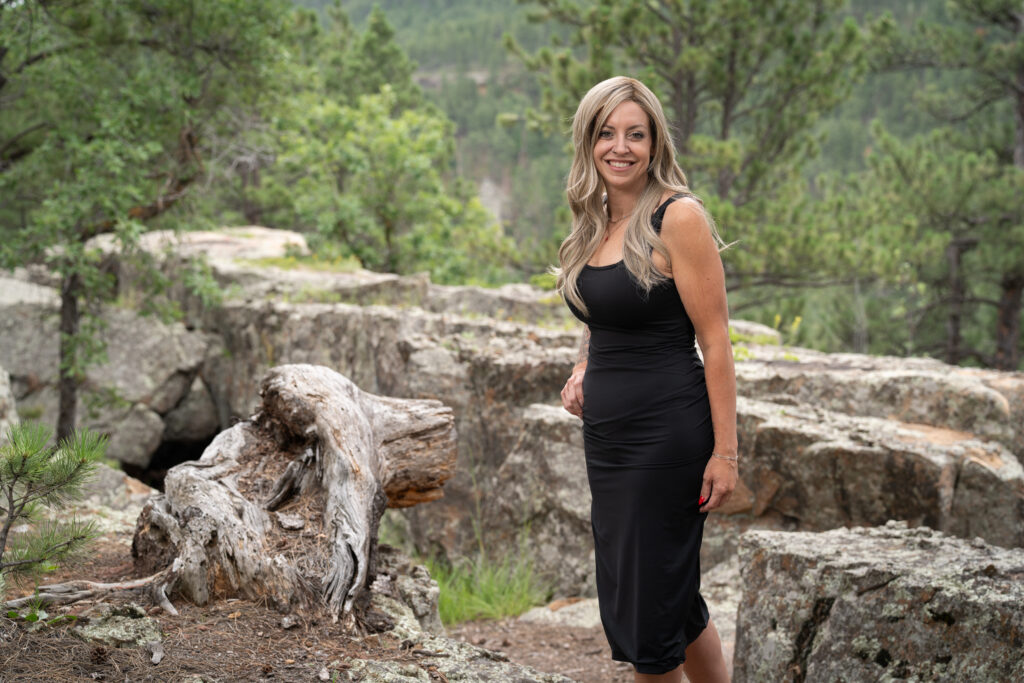
When she started this journey, Rachelle weighed 320 pounds. Now she weighs 145 pounds, and feels like she has a whole new lease on life. She’s more active, feels better and is more confident. “You have so much more energy and motivation to want to try things that you were scared to do before, or felt out of reach. This isn’t just life-changing, it’s life-saving.”
Behind the scenes, Rachelle’s success reflects not just her own effort, but the strength of the comprehensive, multidisciplinary care model at the Monument Health Bariatric and Metabolic Institute — including the bariatric surgeons, obesity medicine specialists, dietitians and the clinical psychiatrist, Kristen Butz, M.D. — that sets this program apart.
“Rachelle is the kind of patient that reminds you of how important our work is,” said Dr. Fromm. “It’s not just about the weight — we get to help people reclaim their lives.”
The Monument Health Bariatric and Metabolic Institute provides a comprehensive, team-based approach to weight loss. They combine surgery with ongoing nutritional, mental health and lifestyle support. Their program features expert bariatric surgeons, advanced practice providers, dietitians and even a clinical psychiatrist. Both the Spearfish and Rapid City BMI programs have earned prestigious MBSAQIP accreditation, which ensures safe, high-quality bariatric care. With rigorous follow-ups — from post-op to annual lifetime care — and strong peer support, the center empowers patients like Rachelle to achieve lasting health, confidence and improved quality-of-life. Visit monument.health/bariatrics for more information.