
 Patient Stories
Cochlear Implants Open Up the World to Rapid City Woman
Published August 2026 in Summer 2026
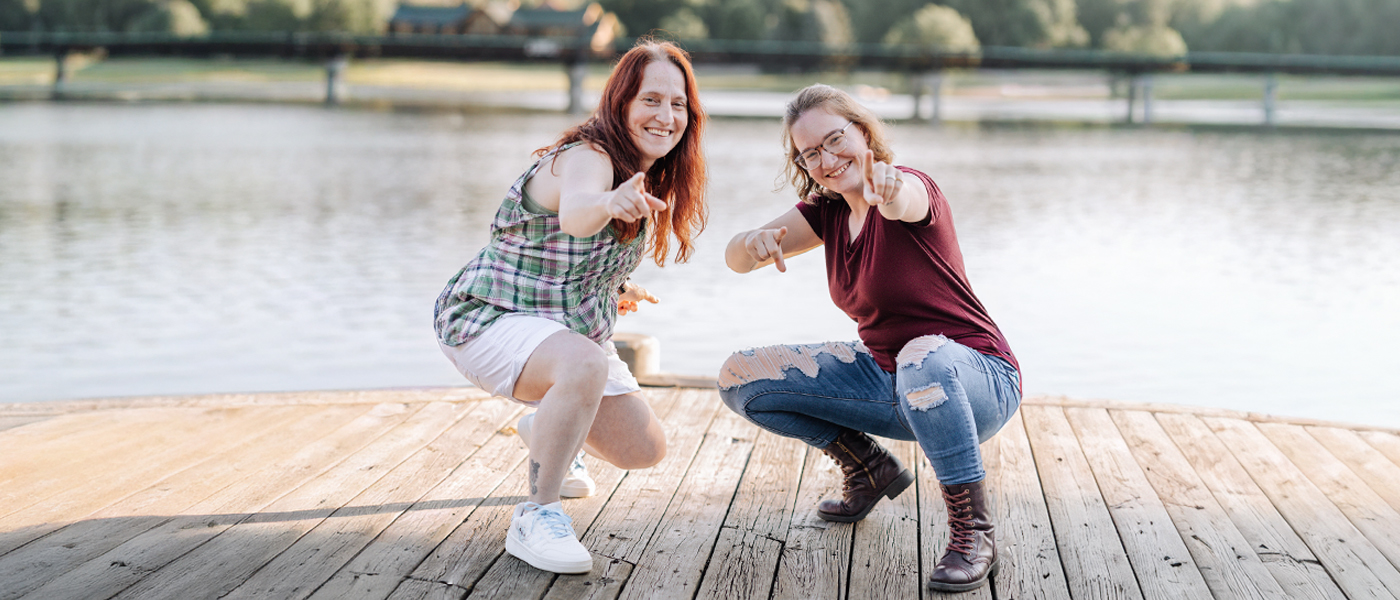
Cerrie Bierwagen went out to a movie recently. Seeing a film in the theater might not seem newsworthy to most people, though for Cerrie, the experience signified a monumental step forward in her life.
Just four months prior to seeing “I Can Only Imagine 2” in a Rapid City theater, Cerrie was essentially deaf. With profound hearing loss in both ears, she had been living for years in growing isolation, watching work opportunities pass her by and seeing her social life nearly disappear.
Then, in July 2025, Cerrie underwent an operation to have two cochlear implants implanted. The procedure gave her back her hearing and in many ways, her life.
“Now, I’m going to movies and concerts,” she said. “I went to a Christmas party. I go out shopping a lot more.”
Perhaps most importantly, Cerrie has been able to better connect again with her children.
“These last five years it had gotten really bad,” said her daughter, Mercedes Newlander. “I found myself avoiding phone calls with her because she couldn’t hear me and it would be a half conversation … I would just text her instead.”
“But now, it feels like I got my mom back.”
Hearing loss in America
Roughly one in seven Americans has some degree of hearing loss. Hearing loss is the third most common chronic physical condition in our country, twice as prevalent as diabetes or cancer.
Untreated, hearing loss is linked to depression, isolation and risk of falls in older people. Despite those risk factors, on average people wait nine years to get their hearing aid after getting a hearing loss diagnosis.
Cerrie understands the hesitation because she, too, waited before seeking help, and she initially rejected the recommendation of a cochlear implant. “I was scared,” she said.
A cochlear implant is an electrical device that is surgically implanted in the skull of a patient. It sends sounds past the damaged part of the ear directly into the hearing nerve. Implants use a sound processor that fits behind the ear on the outside of the body. They look like a large hearing aid. The device draws
sounds from outside the ear and sends those sound signals to the receiver that’s been implanted inside the skull. The receiver sends sound signals down a thin wire that holds sound electrodes that have been placed in the inner ear, also called the cochlea. When the signals trigger the cochlear nerve, the nerve sends the signals to the brain and the brain hears the signals as sound.
In the U.S., about 183,100 adults and children have cochlear implants. Cerrie is one of them and she wants to share her story to encourage others to step past the fear and regain their hearing. “I want people to hear my story and know that they don’t have to live like that.”
A hearing loss journey
Cerrie grew up on a ranch near Philip, riding horses and spending as much time outside as possible. Although she remembers one particularly violent fall from a horse named Jenna and the resulting concussion and blood loss from her ear, she never experienced any hearing loss in her younger years. “I didn’t even tell anyone about that fall,” she said with a smile. It wasn’t until her early 40s that Cerrie began noticing something strange with her right ear. “If I laid on a pillow on the left side, I couldn’t hear the TV,” she said.
At the time, she worked as a Certified Nursing Assistant (CNA) in Reno, Nevada, and her patients would sometimes complain she was ignoring them. She returned to South Dakota in 2019, taking a job in housekeeping with a local hotel chain.
Her hearing continued to decline, now in both ears. Then, the COVID-19 pandemic hit and masks became the norm. “And I couldn’t read lips anymore,” she said. She began losing opportunities at work due to her hearing loss. Usually a gregarious person who loves to talk with people, she began isolating. “I didn’t even go out in public,” Cerrie said. “I always felt like everyone was talking about me.”
Mercedes said her mom’s worries weren’t unwarranted. “I ended up working with her at a hotel one time and they were just mean to her,” she remembers. “People would talk behind her back … I could see people treated her differently. I saw her back away from family events. And find a job where she didn’t have to talk to people as much.”
Felicia Beltman, Au.D, an audiologist at Monument Health Spearfish Clinic, North Ave., said Cerrie’s experience isn’t unusual for people who suffer from hearing loss. “Withdrawal is very common,” she said. “It can affect people’s work, their social lives and their mental health.”
In 2022, Cerrie finally relented to be evaluated for her hearing loss. Felicia established that in a quiet room, Cerrie was only recognizing 26% of the words correctly. “I was shocked that she’d never even had hearing aids,” Felicia said. “She had significant hearing loss.”
By the following year, her hearing had declined even more with virtually no hearing in either ear. Initially, Cerrie rejected the idea of a cochlear implant out of fear. By 2025, though, she had had enough of living life with no hearing.
On July 7, 2025, Troy Howard, M.D., Otolaryngologist, Rapid City Medical Center, implanted two Advanced Bionics cochlear implants into Cerrie’s skull directly behind her ears. The operation took two hours. Six weeks later, Felicia activated the implants.
Cerrie had been warned that initially, voices would sound robotic as the brain worked to translate the sounds; and they did. She said the experience of hearing again was overwhelming at first. “It was amazing and a little chaotic. I teared up,” she said.
Cerrie’s son, Joey Winegar, was with her the day Felicia activated the implants. He remembers her face changing as the sounds grew around her. “It was wild,” he said. “Her face was … she just couldn’t believe she could hear again.”
Mercedes remembers the first phone call with her mom after the surgery. “She called me and we actually had a full conversation. A full conversation. Then when I visited her at her house for the first time, I left feeling so happy that I actually got to talk to my mom. It honestly feels like I got my mom back.”
It took time for the “robotic” sound to go away. However, by September, Cerrie recognized 82% of the words she heard. By December, that number had risen to 90%. In follow-up visits, Felicia said Cerrie is “brighter and just happier.”
“Sometimes when people have hearing loss, they don’t even realize that they are experiencing some depression because of it. I love to see her outcome be so successful.”
Felicia said it’s important to note that a lot of Cerrie’s success has to do with the post-surgery auditory rehabilitation that she did. “I don’t want people to think that they get a cochlear implant and their hearing is (automatically) back. It takes work and patience and Cerrie really put in the time and it shows.”
Not only is Cerrie enjoying movies, bonding with her kids and attending parties again, she’s also getting back to enjoying one of her loves — music. She’s already got her tickets to a Luke Bryan concert in July, and hopes that there are many more concerts in her future. “That’s one of the biggest things I’ve
missed — music,” she said.
Mercedes, who is a band teacher at Chase County Schools in Imperial, Nebraska, can’t wait for her mom to attend one of her students’ concerts. “Last year, before the surgery, she came to one of my band concerts. I wondered if she could even really hear anything. So now, I’m really excited for her to truly
experience one.”
Cerrie hopes that others might hear her story and see a future for themselves — one filled with music, conversation and a rich, full life. “There’s nothing to be scared of. I had no pain after the surgery. And it’s given me my life back,” she said. “I’m excited for the future.”
Story by Lynn Taylor RickPhotos by Lynn Taylor Rick