maurices Donates to Monument Health to Support Healthcare Workers on the Frontlines in the Fight Against COVID‐19

RAPID CITY, SD (April 10, 2020) – maurices, a women’s apparel brand with 900+ stores across the U.S. and Canada, announced today that it is donating $250,000 to multiple rural community hospitals to support healthcare workers on the frontlines of the COVID‐19 pandemic. As part of this donation, Monument Health will receive a donation.

“With maurices stores in more than 900 communities, we are proud to support our local healthcare workers who are on the frontlines treating patients in rural hospitals. These individuals are truly hometown healthcare heroes,” said George Goldfarb, maurices President & CEO.

Goldfarb added, “This escalating crisis has transformed the way we think and work. Like other organizations, we are looking for ways we can support our associates, our customers, and our communities. Often rural hospitals don’t get the support they need, and by providing them with a monetary donation they will be able to purchase what they need most in this fight against COVID‐19. We have been in touch with many of the hospital administrators who have told us the timing for this donation is perfect.”

maurices said they selected Monument Health and other rural community hospitals in markets that are representative of the brand’s full chain.

About maurices

maurices is a women’s specialty apparel retailer that celebrates feel good fashion for real life ™. maurices is committed to its service with style promise and offering affordable fashions that take women from workday to weekend, and all of life’s adventures in between. With inclusive sizing from 024, maurices is famous for its versatile styles including key categories such as denim, dresses, tops and more. Established in 1931, maurices operates 930 stores in communities across the U.S. and Canada and offers even more fashion at maurices.com. maurices is headquartered in Duluth, Minnesota.

Contact: Sue Ross

Chief HR & Communications Officer
(218) 590‐6862
sross@maurices.com

 About Monument Health

Headquartered in Rapid City, S.D., Monument Health (formerly Regional Health) is a community-based health care system with a mission to make a difference, every day.   The system offers care in 33 medical specialties and serves 20 communities across western South Dakota and in eastern Wyoming. With over 4,500 physicians and caregivers, Monument Health is comprised of 5 hospitals, 8 specialty and surgical centers and more than 40 medical clinics and health care service centers. Monument Health is a member of the Mayo Clinic Care Network.
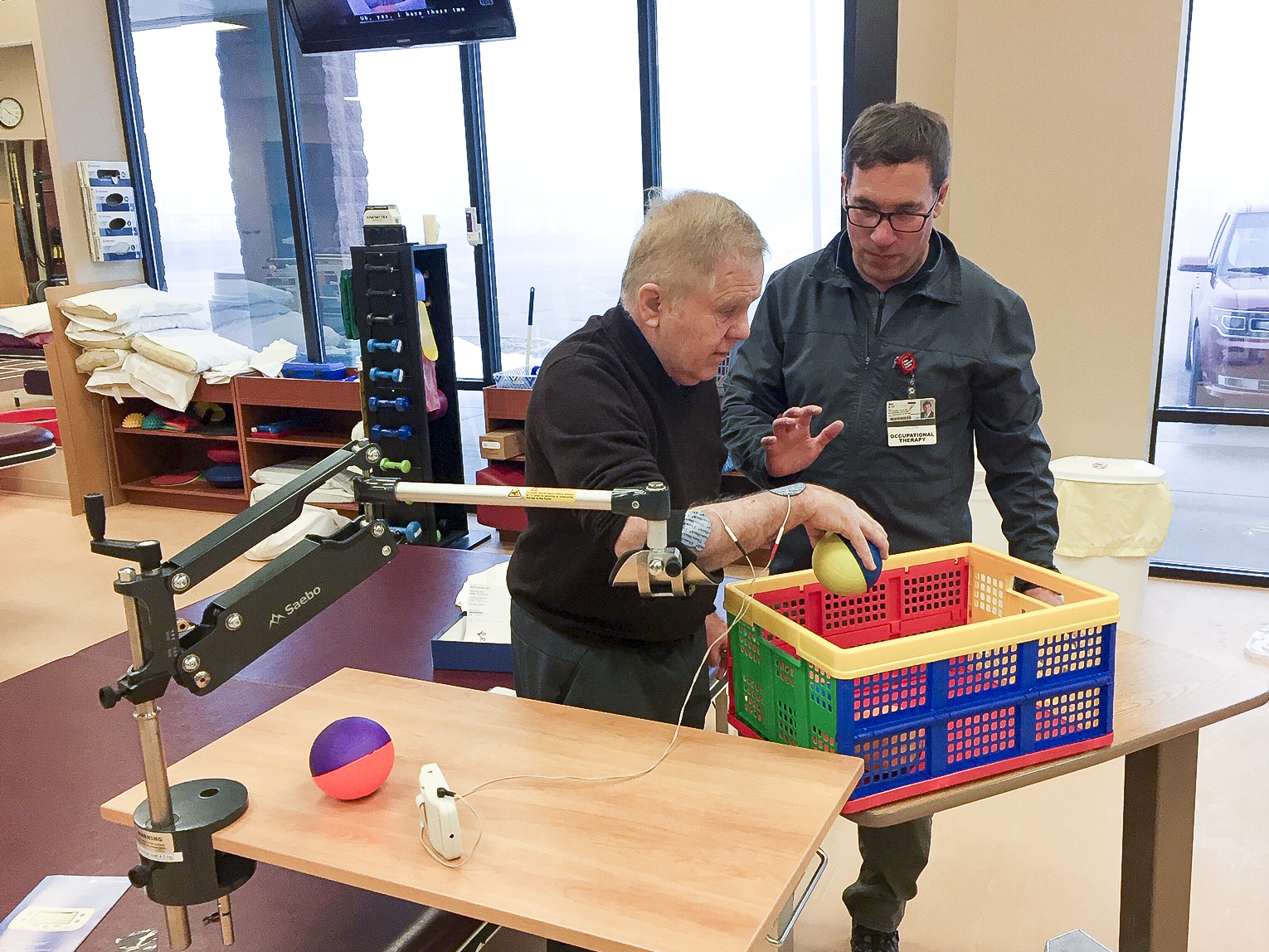
 

Stroke rehab patient gains appreciation for occupational therapy

When Bob Burnett first met Jon Bosworth, Occupational Therapist in Spearfish, he couldn’t move his right arm. Bob had suffered a stroke that affected the entire right side of his body. He could barely walk when he started rehabilitation two weeks earlier, before being referred to Jon. Bob has always been a pretty active guy, so the whole experience has been humbling. But he’s made a lot of progress, thanks in part to occupational therapy, a profession Bob knew very little about before meeting Jon.

Jon has been an occupational therapist for over 20 years, and he specializes in stroke rehabilitation. His goal as an occupational therapist is to help his patients gain as much independence as possible after they’ve had a significant injury by improving function or modifying activities.

“Recovering from a stroke is not an easy process,” Jon said. “It doesn’t happen overnight. It takes a lot of work to retrain the brain to do some of these things.”

One way occupational therapists help patients recover is by designing custom orthopedic splints that help stabilize a body part. For example, after a hand or wrist injury, a splint might allow someone to grab on to a ski pole again. Being in the Black Hills, Jon has seen his fair share of injuries due to outdoor activity. He’s designed splints for people to use on motorcycles and on ski poles, and he’s also helped ranchers make modifications that allow them to continue their work.

The process of making splints is part of what drew Jon, a Rapid City native, to the profession. “I observed therapists making splints, and it really intrigued me,” he said. “It allows you to be really hands-on with patients.”

It was this technological side of occupational therapy Bob was unaware of when he started working with Jon. “Jon’s built splints for me a couple different times during my evolution of recovery that have been very helpful,” Bob said. “I’ve had a great deal of help and gained a big appreciation for what these people do.”

Through his recovery, Bob said he’s been touched by all of the nurses and therapists who have helped him. “I’ve been really impressed with the level of care at Monument Health,” he said. “And the environment here with Jon is very supportive and encouraging. I definitely have a coach in Jon.”

Bob’s been working with Jon for 15 months now, and his motto has been: “You’ve just got to keep working at it. You can’t expect a miracle if you’re not willing to do your part.” Thanks to Jon and all of the occupational therapists for helping your patients realize their full potential.

Spiritual care meets important need, provides holistic treatment

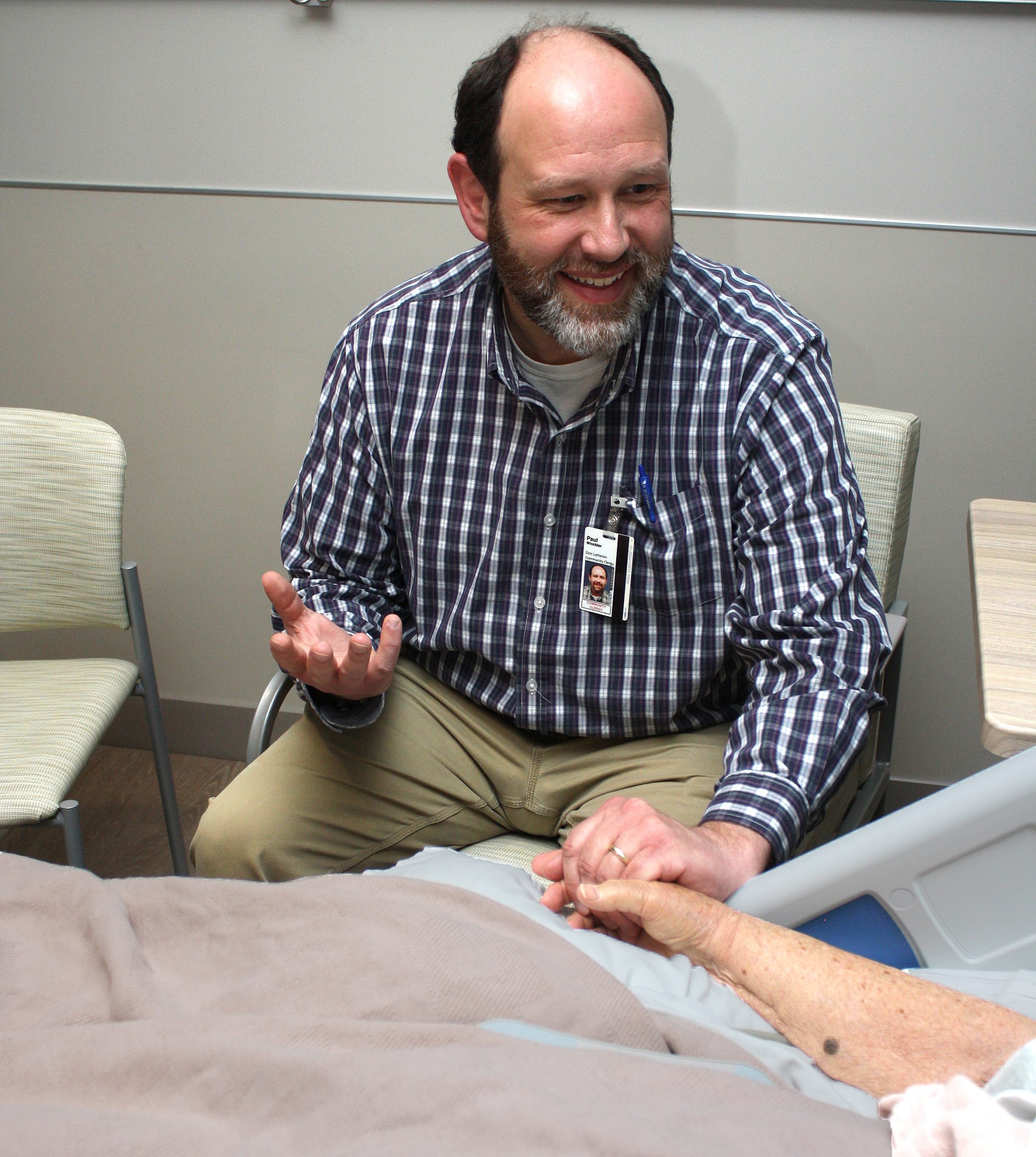
Everybody, especially in times of hardship or poor health, wants the opportunity to talk about the things they hold in their heart – the joys, the hopes, and even the fears – according to Pastor Paul Winkler of Zion Lutheran Church in Rapid City. “The human is more than just body – we’re also mind and spirit,” he said. “Providing emotional support to patients and their families can really improve the experience for everyone.”

Pastor Paul is one of 45 community clergy members who gathered at Rapid City Hospital last month to learn about Monument Health’s Spiritual Care Services program. The goal of the program, led by Sandra Ogunremi, DHA, Manager of Spiritual Care Services, Diversity & Inclusion, is to provide spiritual support to patients through both community members and caregivers/providers who are credentialed clergy. It is active at Rapid City Hospital now, and the hope is to expand it to all Monument Health hospitals.

“This is a priority for us because we know there’s a direct correlation between spiritual care and patient outcomes in terms of how quickly someone can recover, readmission rates, patient satisfaction and more,” Sandra said. As an ordained minister through U.S. Assemblies of God, she knows from experience and from research that when people need to seek care, they usually experience a lot of fear. “Even though they may trust their physician completely, a lot of people want reassurance and want to turn to a higher power to help them through those situations,” she said.

The World Health Organization defines health not only as the absence of disease, but a state of physical, mental and social well-being. Jason Lambert, Manager of Patient-Centered Design, said spiritual care is a foundational component of providing a caring experience for Monument Health patients. “Left unaddressed, unmet spiritual needs can manifest in many ways such as anxiety, depression and confusion and can often lead to other maladies – all avoidable forms of suffering,” Jason said.

Community clergy members who provide spiritual care go through all necessary training and receive a Monument Health identification badge. They are also invited to attend monthly meetings to receive tools and education and give feedback about how the program is going. Clergy are encouraged to provide spiritual support to any patient who wants it, regardless of their faith background. Sandra’s long-term goal is to have enough volunteers to be able to provide 24/7 coverage.

Internal caregivers are encouraged to get involved in this effort as well. “If you identify a spiritual need on your floor and you feel comfortable filling that need, we encourage you to do that,” Sandra said. Caregivers can also sign up as volunteers to provide this service outside of work. Contact Sandra Ogunremi for more information.

Pastor Paul has been visiting Zion Lutheran parishioners at Rapid City Hospital for over nine years. “I’d like to extend my appreciation to the administrators and caregivers at Monument Health for seeing the importance of this and also for being so welcoming,” he said. He added that he is happy to provide some assistance to health care providers, who have such busy jobs. “They’re incredibly caring people who do such wonderful work, but they have a huge responsibility. It’s important to me to support them if I can.”

Thank you to all of our volunteers and caregivers who provide spiritual support to patients and families.

Caregiver and dog “Blue” offer compassion to deaf community

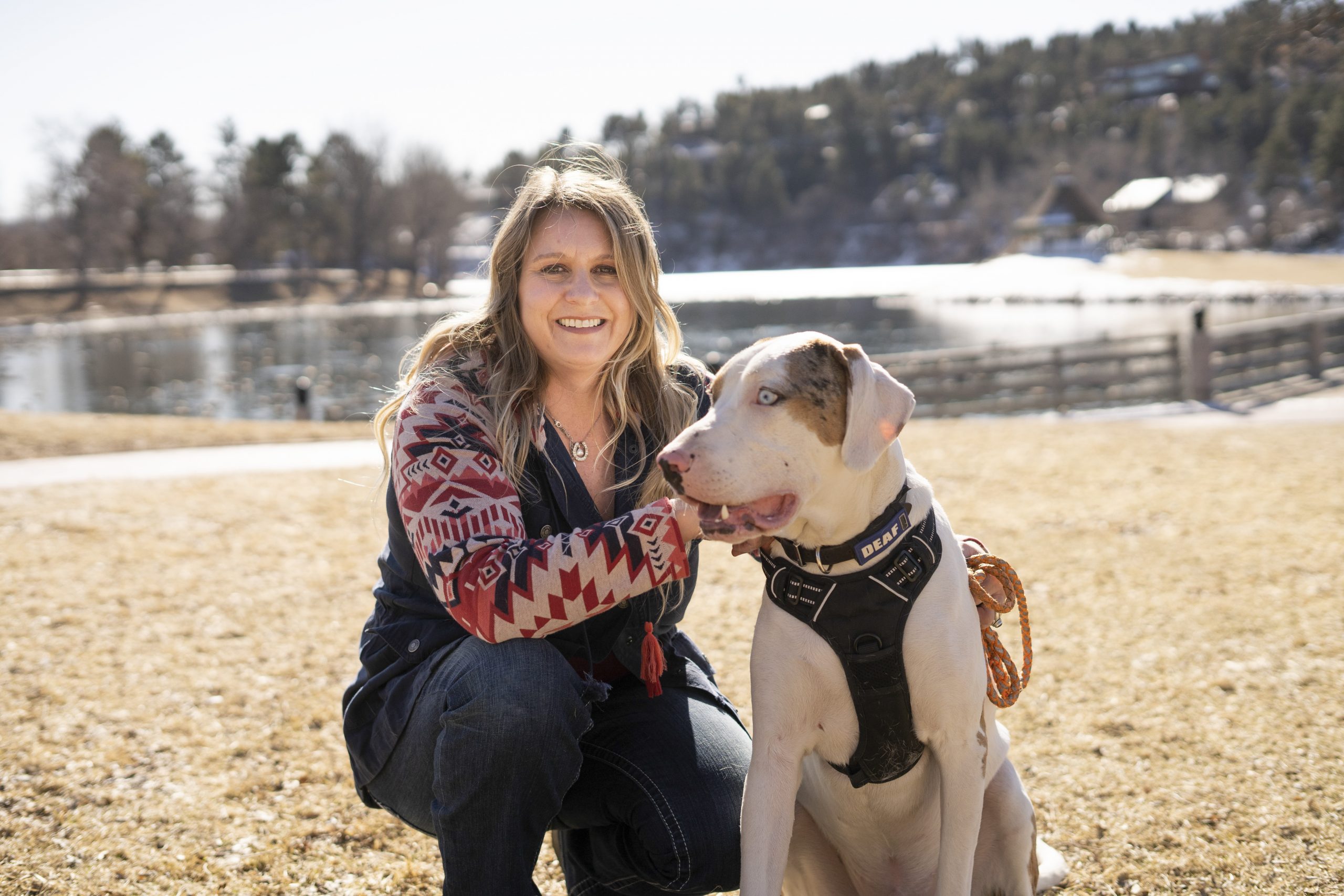
Blue is a 1-year-old, 95-pound Catahoula Leopard Dog with ice blue eyes. He loves people. The Catahoula breed – the Louisiana state dog – makes him a working dog, so he likes having a job. Blue is constantly looking to his owner for direction on what he should do next.

Blue also happens to be deaf. His would-be owners, who wanted him for hunting, decided not to take him when they heard the news. Nicole Shiffrar, Executive Assistant and Worker’s Compensation Coordinator in Lead-Deadwood, was looking for a companion for her older dog when she heard Blue needed a home. “Once we saw him, we knew we had to have him,” she said. “We went that day and picked him up.”

From that day on, Blue’s done a lot more than just keep his fellow canine friend company. For starters, Nicole’s 15-year-old son has been training him with sign language to become a hunting dog. But Blue has another, perhaps more important gig – bringing joy to deaf individuals (and anyone else he meets along the way) in the Black Hills. He’s visited deaf education classes at Lead-Deadwood Middle School as well as Wolf Creek School in Pine Ridge. The kids have especially enjoyed that Blue will give hugs on demand.

“I think they understand one another,” Nicole said. “[The kids] don’t want him to leave. It’s a win-win. This dog needs a job, and I knew he could bring people joy.” Blue had already gone through extensive training before Nicole took him home, so he is highly socialized and has a great disposition. Nicole makes her visits educational, providing information on deaf animal awareness, Blue’s breed and other questions. One student wrote a report after their visit.

Kerry Ruth, Outreach Consultant for the South Dakota School for the Deaf, said the experience has a lasting impact on the children involved. “Our students who use sign language sometimes have limited communication partners,” Kerry said. “For most, this is their first chance meeting a deaf dog, and Nicole’s vision and generosity made it possible.”

Mark Schmidt, President of Lead-Deadwood and Custer Markets, said it’s just like Nicole to connect the dots and figure out a way to serve both Blue and the community. “Talk about someone who really has a passion and a heart of gold for community service,” he said. “She’s always looking for opportunities like this and has her hand in a lot of different projects.”

Blue’s schedule is already pretty full, but Nicole has even bigger plans for him. She’s wants to get him certified as a search and rescue dog. Nicole worked for the Belle Fourche Police Department before starting with Monument Health 10 years ago and has spent a lot of time volunteering with missing persons cases. Catahoula dogs’ intelligence and ability to scent track through the air as well as on the ground make Blue a great candidate for that work.

“There aren’t very many people who have the ability to do this with a deaf dog,” Nicole said. “Most deaf dogs are put down at birth, so for him to be here is a miracle in itself.” She recognizes the unique opportunity to do more than make life great for Blue, but to benefit others, too. Thanks to Nicole and all our caregivers who go above and beyond to serve other people (and our furry friends).

Health summit serves important need in the Black Hills

Being a good steward of our community includes having a presence at events that matter to people in the Black Hills and reaching patients where they are. Providers and caregivers with Monument Health did just that at the first Community Health Summit during the Black Hills Stock Show and Rodeo. Seventeen departments participated, representing their services by offering health education, free or low-cost screenings and labs, immunizations and more.

Cory Ferguson, Monument Health Community Relations Specialist, said the success of the event far exceeded his expectations. “To hold our first summit at the second largest event in South Dakota was a huge undertaking,” he said. “Our goal is to reach out into the community even more, and this is a huge way of doing that. I was blown away with how everyone came together to make it work.”

Cory estimates that more than 5,000 community members were in contact with Monument Health during the summit, gaining information about available services, receiving education through one of our speakers, getting an immunization or preventative screening or completing lab work.

Spearfish Pharmacist Steve Case participated every day, administering more than 170 vaccinations. “I loved talking to so many great people from diverse backgrounds,” he said, adding that he feels pharmacists need to “get out from behind the counter” as much as they can. “My goal with each person I met was to do something to help them be a little better off than they were before our encounter. If we prevent even one person from getting shingles, pneumonia, pertussis, influenza, cervical cancer or tetanus, then we have accomplished something.”

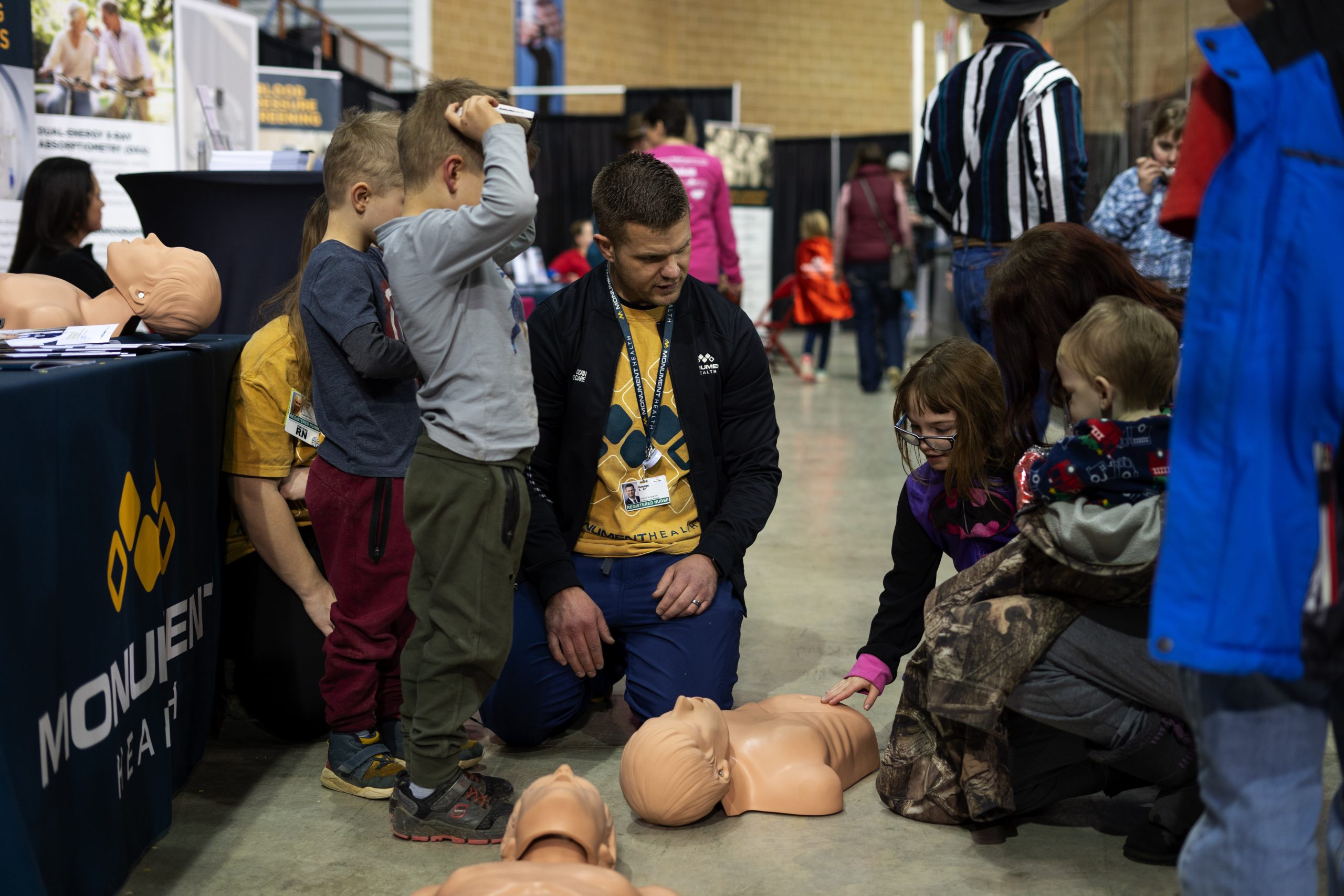
George Sazama (below), Director of Intensive Care Nursing at Rapid City Hospital, said it’s important for Monument Health caregivers to be in the community offering information regarding preventative care as opposed to just helping patients once they’re ill. George offered bystander CPR training, a skill he views as “extremely important” because it gives people the power to take that first step when someone truly needs their help.

Cory reiterated the importance of community outreach, especially when it comes to the people attending the stock show – the agriculture community. “I grew up in a rural area that was 60 miles from the nearest town. Similar to some of the people traveling to the stock show, we couldn’t get these services right down the road. To be able to offer low-cost screenings, vaccinations and blood draws to people while they’re here, is huge.”

The goal is for future events to be true “community” health summits, Cory said, in that Monument Health will partner with outside organizations to offer more services. This year, Delta Dental brought its Mobile Smiles program, giving away toothbrushes and floss, and the Northern Plains Eye Foundation offered free vision screenings to youth. Live Well Black Hills was also present. Cory also gave a nod to the Civic Center staff and Sutton Rodeo for being so accommodating.

Monument Health plans to conduct this and future Community Health Summits quarterly at the Civic Center as part of its community health improvement plan to promote wellness and serve the community’s long-term health care needs. Thank you to all departments and individual providers who volunteered their time to help us go above and beyond with our priority to impact our communities.

“It was a collaborative effort,” Cory said. “It was nine long days, and people took time out of their busy schedules to make sure they were a part of it. We appreciate everyone’s commitment.”

Treadmill Challenge raises appreciation for cardiac rehab

Most health-related success stories heard on the news or through word-of-mouth are about patients who suffered a condition and were helped due to an innovative procedure or drug – or even a heroic individual who was in the right place at the right time. The stories that often are not told, however, are those that don’t happen; rather, the times when a condition or unfortunate event was avoided due to proper preventative care.

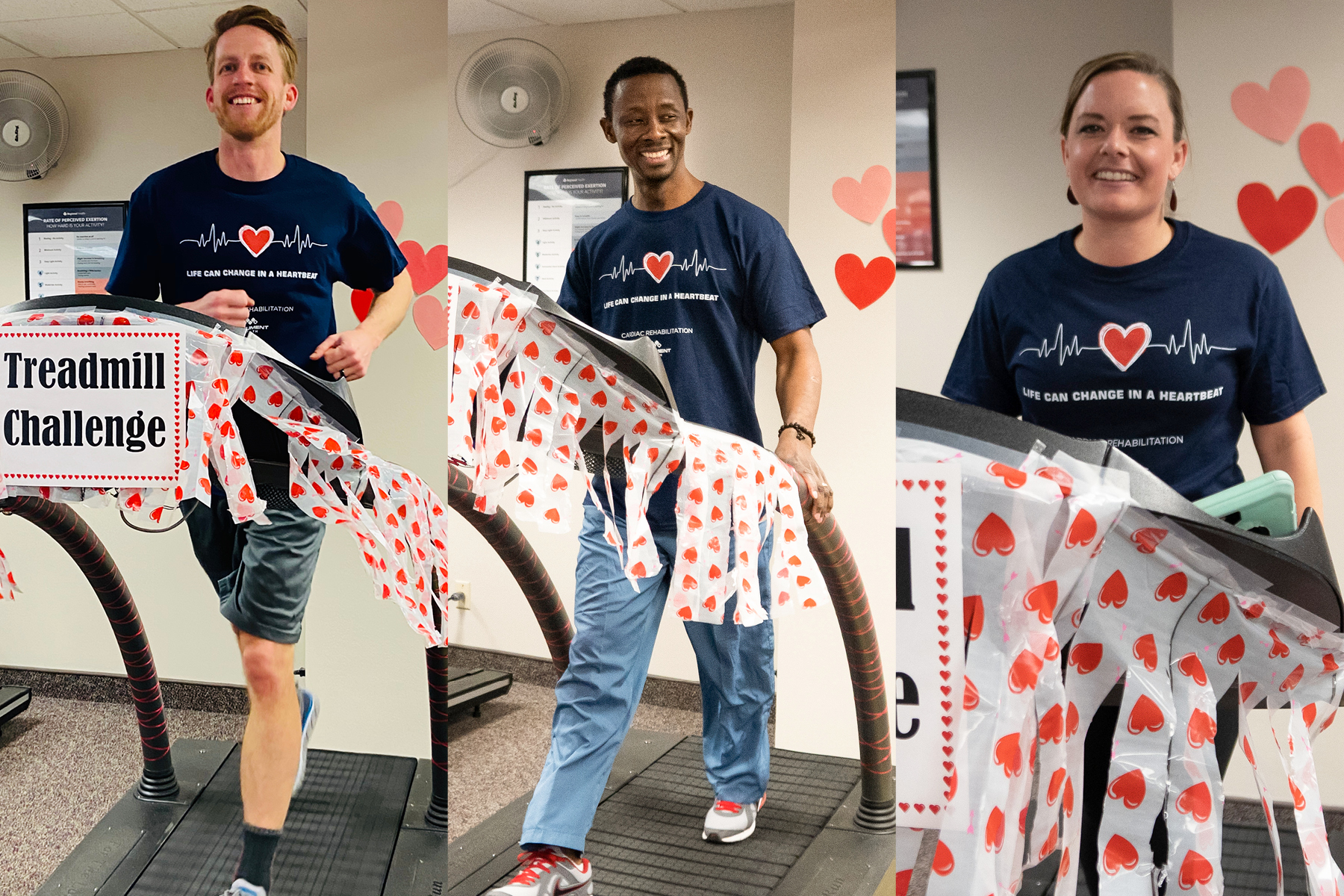
Nurse Practitioner Matt Gross with the Heart and Vascular Institute (HVI) hopes folks will acknowledge the importance of the latter this week. It’s Cardiac Rehab Week, and Matt organized the Treadmill Challenge which took place yesterday in Rapid City Hospital’s Cardiac Rehab Gym. Working like a relay team, 13 providers took turns continuously walking on a treadmill between 8 a.m. and 6 p.m. Patients participated as well, exercising alongside their providers.

“The cardiac rehab program is one of the best things someone can do to prevent heart disease,” Matt said, noting that while cardiac rehab providers don’t always see the effects of their work with patients, they provide one of the most important services. “Prevention is hidden. But the statistics show you’re probably saving more lives and preventing more heart attacks and strokes than you could in other areas of the hospital.”

Most cardiac rehab patients are referred by a provider after suffering a condition like a heart attack or heart surgery. Patients in the Phase 2 Cardiac Rehabilitation Program at Rapid City Hospital exercise three days a week for one hour, completing 36 sessions. They also receive education on heart-healthy topics.

Exercise Physiologist Kindal Malehorn sees patients in the hospital right after a cardiac event and continues to work with them when they’re in the Cardiac Rehab program. She said the job is extremely rewarding. “We get to witness miracles. I’ve seen people come in in a wheelchair, but by the time they leave they’re running on a treadmill. We get to be a part of an incredible transformation.”

At the end of the day, Matt hopes cardiac rehab patients recognize that they’re making a good decision by participating. “I hope they know the world of good they’re doing for themselves.”

February is American Heart Month. Monument Health caregivers also helped organize the February Freeze 5k Fun Run/Walk that took place Feb. 9 at Founders Park in Rapid City.

The Cardiac Rehab Gyms in Lead-Deadwood, Spearfish, Sturgis and Rapid City, as well as the Physical Therapy Gym in Custer, are open to all caregivers and physicians. Find more information on the LiveWell portal under the “Resources” tab by clicking on “Move Well.”


(Above photo, left to right: Matt Gross, CNP, Martin Digler, PA-C, Becky Sharp, CNP)

Rapid City Hospital honors DAISY winner

RAPID CITY, S.D. (Feb. 6, 2020) – Susan McKinney, Registered Nurse at Hospice House in Rapid City, has been recognized with the prestigious DAISY Award. A national program, the award is presented to nurses across the United States who go above and beyond for their patients and community. Susan was nominated by a patient’s family member who said that while all of the caregivers at Hospice House were kind and brought a personal touch, the family developed an attachment to Susan.

“Susan stood out in her compassion, knowledge and ability to reassure us that [my brother] was getting the best care through the many stages and changes he went through with his end-of-life journey.” The nominator said the family has great respect for Susan, and that the family refers to her as their favorite nurse. “It felt good to be able to count on Susan’s assuring words of what to expect next and how to comfort him.

The DAISY Award for extraordinary nurses recognizes those who display dedication to the health and wellness of their patients. The DAISY Award was established by the DAISY Foundation in California in memory of J. Patrick Barnes, who died at age 33 of an autoimmune disease. DAISY is an acronym for “diseases attacking the immune system.” The DAISY Award continues to recognize and celebrate the outstanding professionalism and compassion that nurses bring to patients and their families every day.

About Monument Health
Headquartered in Rapid City, SD, Monument Health is a community-based health care system with a mission to make a difference, every day. Today Monument health offers care in 33 medical specialties and serves 20 communities across western South Dakota and in eastern Wyoming. With over 4,500 physicians and caregivers, Monument health is comprised of 5 hospitals, 8 specialty and surgical centers and more than 40 medical clinics and health care service centers.

###

CONTACT
Stephany Chalberg
Public Relations Manager
Strategic Marketing and Communications
Monument Health
605-755-9086
schalberg@monument.health

Rodeo Rapid City Health Summit offers free, low-cost services

RAPID CITY, S.D. (Jan. 28, 2020) — Attendees to Rodeo Rapid City held in conjunction with the Black Hills Stock Show can receive free and low-cost health services, preventative screenings, as well as information about staying healthy, during the first Community Health Summit, sponsored by Monument Health.

The Community Health Summit will be located within the Civic Center Ice Arena Jan. 31 to Feb. 8, during Rodeo Rapid City. Admission is free, and the venue will be open each day from 10 a.m. to 7:30 p.m, with clinical screenings and preventive care available from 3 p.m. – 7:30 p.m each day. However, on Sunday, Feb. 2, the summit offers only non-clinical services and will close at 4 p.m. The full schedule of events is available at monument.health/healthsummit.

Visitors can get blood pressure checks, flu shots, CPR training, prediabetes screening, laboratory testing, audiology tests and other health care services during the stock show. In addition, visitors can hear talks from doctors and other health care professionals about subjects such as foot pain, carpal tunnel syndrome, stroke prevention, back pain and screening for heart and lung problems.

Monument Health plans to conduct this and future Community Health Summits at the Civic Center as part of its community health improvement plan to promote wellness and serve the community’s long-term health care needs. For more information about the Community Health Summits, contact Monument Health at 605-755-9191.

About Monument Health
Headquartered in Rapid City, S.D., Monument Health (formerly Regional Health) is a community-based health care system with a mission to make a difference, every day. The system offers care in 33 medical specialties and serves 20 communities across western South Dakota and in eastern Wyoming. With over 4,500 physicians and caregivers, Monument Health is comprised of 5 hospitals, 8 specialty and surgical centers and more than 40 medical clinics and health care service centers. Monument Health is a member of the Mayo Clinic Care Network.
###

CONTACT:
Stephany Chalberg
Public Relations Manager
Strategic Marketing and Communications
Monument Health

Gathering to honor longtime Sturgis physician

STURGIS, S.D. (Jan. 22, 2020) — The public is invited to a reception at Monument Health Sturgis Hospital to honor Dr. H. Thomas Hermann Jr., who is retiring after 33 years of practicing medicine in the Sturgis community. The gathering will be held in his honor on Friday, Jan. 31, from 2-4 p.m. in the Community Room of Sturgis Hospital and Clinic.

Dr. Hermann grew up in Sturgis and graduated with the Sturgis High School Class of 1968. He received his medical degree from the University of South Dakota School of Medicine in 1984. After completing his family medicine residency at the Sioux Falls Family Medicine Residency Program in 1987, Dr. Hermann returned to his hometown to set up his practice at the Massa Berry Clinic.

He is board-certified in family medicine and is a Fellow in the American Academy of Family Practice. He also serves as a Clinical Professor of Family Medicine at the University of South Dakota Sanford School of Medicine. He won the J. Batt, M.D. Memorial Award from the Sanford School of Medicine in 2011.

In addition, Dr. Hermann has been active in the South Dakota State Medical Association. In 2016, he was elected as the 135th President of the association. Prior to that he held offices on the SDSMA’s Executive Committee, served as a councilor for the Black Hills District Medical Society, and served as the SDSMA Foundation Board chair.

About Monument Health
Headquartered in Rapid City, S.D., Monument Health (formerly Regional Health) is a community-based health care system with a mission to make a difference, every day. The system offers care in 33 medical specialties and serves 20 communities across western South Dakota and in eastern Wyoming. With over 4,500 physicians and caregivers, Monument Health is comprised of 5 hospitals, 8 specialty and surgical centers and more than 40 medical clinics and health care service centers. Monument Health is a member of the Mayo Clinic Care Network.
###

CONTACT:
Dan Daly
Communications Specialist
Strategic Marketing and Communications
Monument Health
605-755-9178
ddaly@monument.health

Custer patient continues active lifestyle after hip replacement

When Duane Weber saw an X-ray of his left hip, he knew something wasn’t right. He had been an avid runner since he was 15 years old and had spent 35 years on his feet working for the National Park Service. But while the evidence in front of him indicated he needed a new hip – and his active career and lifestyle could explain some of the deterioration – Duane was hesitant to schedule surgery.

“It was really a shock to me,” Duane said. “I had never had any kind of surgery. And I was also a lifelong athlete realizing that parts of me were wearing out.” Duane, now retired, said he logged over 500 miles on his feet every year for his job, mostly in Wind Cave National Park. He tracked elk herds in the Southern Hills, and because most of his work was disease research, he usually carried his mobile laboratory wherever he went – which meant a lot of extra weight on his joints.

A few years ago, Duane decided to tell his primary care physician in Custer, Lisa Brown, M.D., about the pain he was experiencing. “When I went on my longer runs, it just wasn’t as comfortable. I figured it was just aches and pains from getting older.” Imaging results told a different story. Because Duane was in such good physical condition otherwise, he hadn’t noticed how bad his hip was deteriorating.

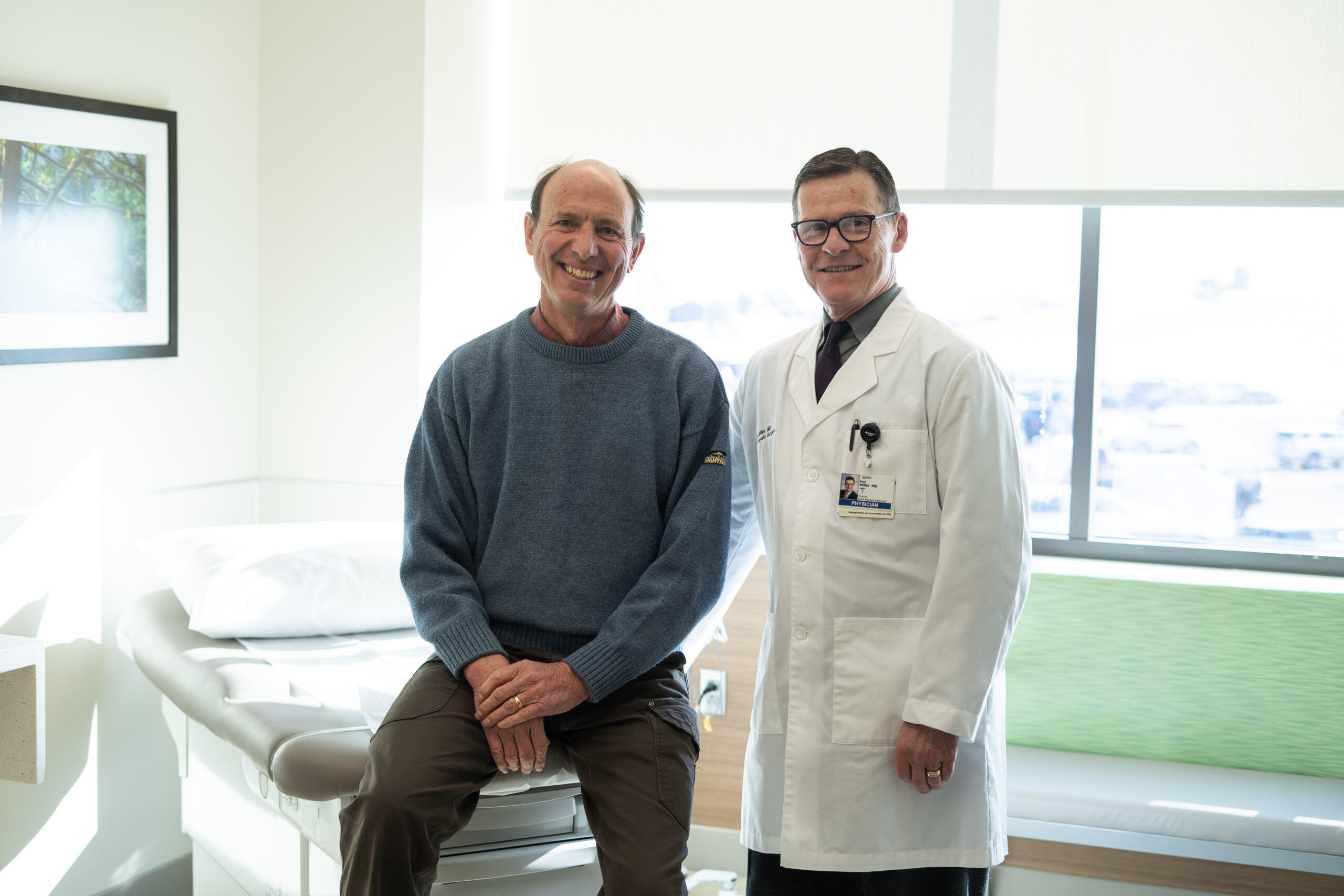
Dr. Brown referred him to Orthopedic Surgeon Paul Miller, M.D., in Rapid City. “The consensus was not whether I needed a new hip, but when,” he said. Duane wasn’t ready to have surgery. “Dr. Miller could sense my hesitation and knew I wasn’t keen on pursuing the surgical option. He never made me feel pressured. He just said, ‘When you’re ready, you let me know.’”

Duane went on for another year and a half, chasing elk, hunting, fishing, hauling firewood, etc. “It wasn’t getting any better, and it was starting to impact my choices. But 60 years old was too early to start giving up on all the activities I wanted to do.” He went back to Dr. Miller, and his hip was replaced in December 2018.

Duane is grateful for Dr. Miller’s patience and demeanor as a physician. “He never made me feel like he was in a hurry, he always had time.” But most notably, Duane remembers that right before surgery, Dr. Miller allowed him a moment to talk with the surgical staff. “I was able to introduce myself as a 60-year-old grandfather and wildlife biologist who wanted to return out into the field. I wanted them to know they were working on Duane Weber.”

Another moment he’ll always remember is how one caregiver, sensing his nerves, put her hand on his upper arm as he was being put to sleep, and told him he’d be well taken care of. told him.” “To a guy who really doesn’t understand what’s going on, that was really comforting.”

Four months after surgery, Duane summited Chupadera Mountain in New Mexico during a national wildlife refuge volunteer trip. His group was collecting botany samples and wasn’t planning to go to the top, but Duane knew he had to continue. “I wasn’t going to go that far without going to the top. And away I went.”

Duane might be retired, but he doesn’t plan on slowing down. He’s going to keep climbing mountains.