 Patient Stories
Closing the Gap
Published November 2025 in Fall 2025
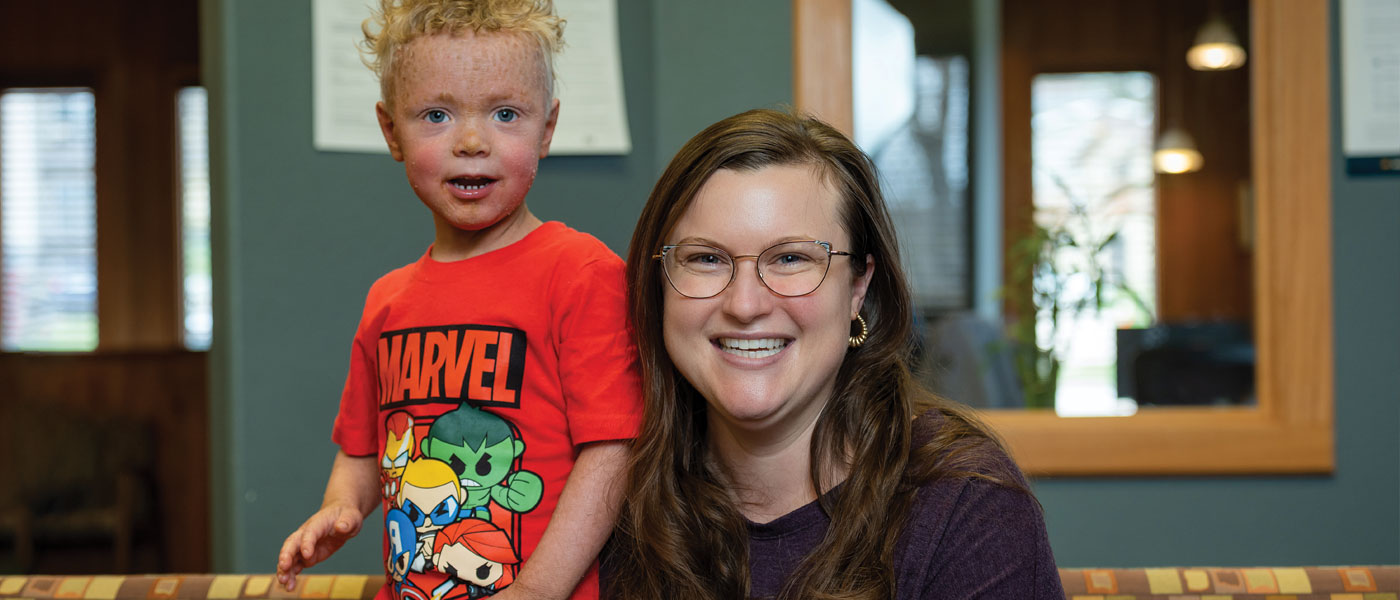
The distance between reliable health care and rural patients is growing. When your child suffers from a rare health condition, you do whatever it takes to close that gap. Of course, it helps to have a passionate Physician like Dermatologist Mary Logue, M.D., in your corner.
Rural American families have always lived slightly removed from the services that many of us take for granted: entertainment, groceries, sometimes even fuel for vehicles. For Mark Trout and Victoria Klingbeil-Trout, life in Mohall, North Dakota, comes with a certain number of sacrifices; having to travel 45 minutes to Minot for medical care, for example. One thing they never expected to have to travel even further for, though, was reliable health care for one of their young sons, 3-year-old Wyatt.
Wyatt was born in Minot, North Dakota. He was three weeks premature. “It was kind of a traumatic delivery experience,” said Mark, Wyatt’s dad and a self-employed farmer and campus pastor. “He just looked a little bit different. He had what they called a collodion membrane over his entire body, which is kind of like a cellophane wrap over his skin.”
As Mark and his wife, Victoria, would be told later, the collodion membrane indicated a rare genetic disorder called lamellar ichthyosis, an incurable, lifetime condition that causes patches of dry skin to form scales all over the body.
The on-call pediatrician whisked tiny Wyatt to the NICU and placed him in an incubator. The high humidity inside helped the membrane to peel off without causing more pain and discomfort than necessary.
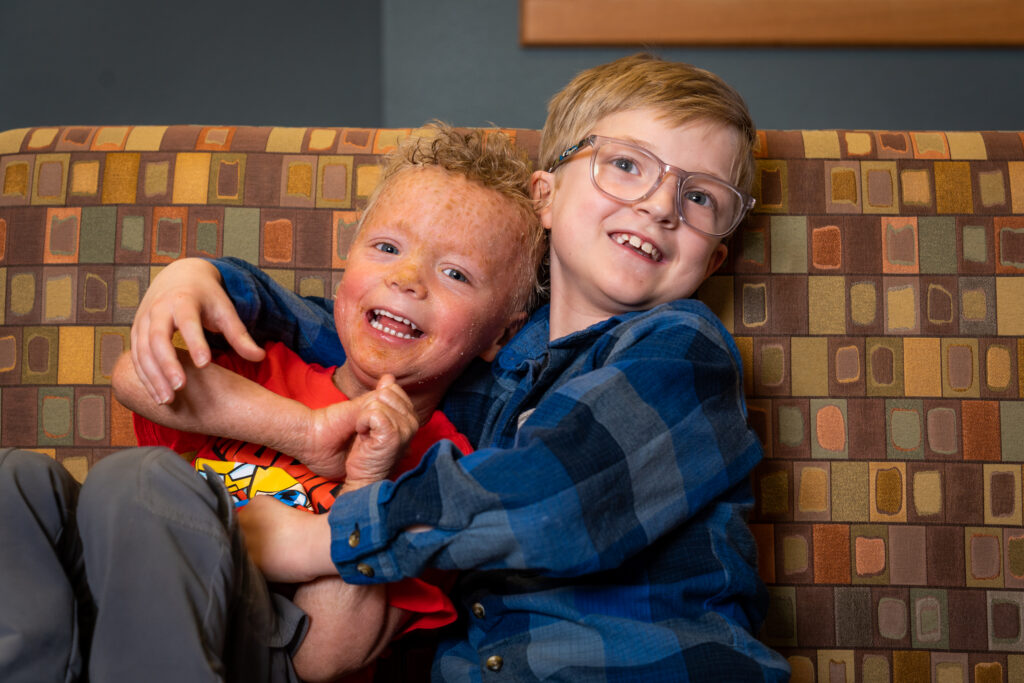
“Because ichthyosis is such a rare disorder, it wasn’t something that a lot of the staff had ever dealt with,” Mark said.
Luckily, at the time, the Minot hospital had on its staff Mary Logue, M.D., a Dermatologist who specializes in pediatric patients and now practices at Monument Health Dermatology in Spearfish.
“Thankfully, the pediatrician reached out to me. I was able to identify his skin condition based on photos and provide immediate reassurance and advise on medical care recommendations,” Dr. Logue said. “Both as a medical student and a resident, I’ve seen around a half dozen cases of lamellar ichthyosis or related skin conditions. Pediatric dermatologists, which are few, and mostly localized to major cities, tend to be the most comfortable at identifying and treating this condition.”
Wyatt’s condition causes itchiness and discomfort at minimum. If his skin gets too dry it cracks and bleeds. Scales can form on his head and combine with his hair, which occasionally creates open wounds. These sores make him more susceptible to staph infection than the average person.
“Dr. Logue is really good at educating you and giving you the confidence you need to be able to care for a child that has a special skin type,” said Victoria. “I went home knowing that if something were to happen, I had someone to call who I could trust, and that it’s going to be okay. That’s so important.”
The RADS Solution
Ever since she was a young girl, Dr. Logue has held a soft spot for rural communities. She was born and raised just outside of Decatur, Illinois, “the Soybean Capital of the World.” She has been disheartened to see her hometown slowly shrink, along with other, similar rural cities in the U.S. As these areas lose population, they lose important services, particularly specialized health care.
“I completed my dermatology residency at the University of New Mexico, where I served a massive rural area including Navajo and Pueblo tribal nations. It was unacceptable to me that these communities were facing such a devastating lack of access to high quality dermatologic care,” said Dr. Logue “This issue is very personal to me. So, I founded a nonprofit called Rural Access to Dermatology (RAD) Society. It’s a ‘boots on the ground’ initiative bringing together my rural colleagues to improve access to care in rural communities across the country. I have patients from South Dakota, North Dakota, Montana and Wyoming and I’m honored to be part of their journey to healthier skin.”
It is important for Wyatt to be appropriately managed by an expert. So when Dr. Logue made the difficult decision to relocate from Minot to Spearfish and begin working for Monument Health, Mark and Victoria faced a gap in care.
“A lot of rural clinics don’t think that you need to have dermatology,” said Victoria. “Your primary care doctor can treat some things; other things get misdiagnosed and kids are going years of being mistreated, causing issues. I’m seeing it with my co-workers and friends in the area. It’s just sad to see that we’re not getting access to those doctors.”
Mark and Victoria were so confident in Dr. Logue’s care of Wyatt that when she made the move to Spearfish, they stuck with Dr. Logue, despite the long distance. “It doesn’t feel like a sacrifice to drive seven hours to get good treatment, because we know Dr. Logue is an amazing doctor who goes above and beyond for her patients,” Mark said.
A Supportive Community
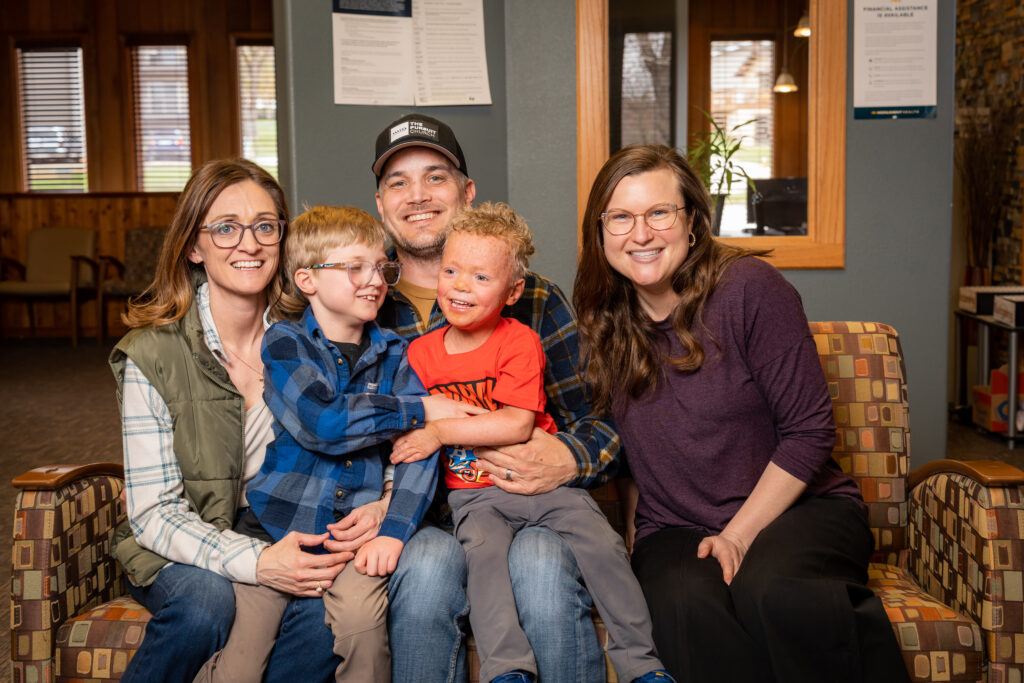
In addition to treating Wyatt, Dr. Logue put Mark and Victoria in touch with organizations that help parents of children suffering from conditions like Wyatt’s. They now belong to a community of other families that travel to gatherings across the U.S.
The support has been life changing, according to Mark. “We apply an ointment to Wyatt’s skin twice a day. It helps to keep it moisturized and protected from infection. One jar costs about $20 and we go through about one jar a week. A patient advocacy organization supplies us with a case every three months,” he said.
Still, there is much care required for Wyatt on a daily basis. Special preparation and constant attention is necessary for Wyatt to experience a normal childhood. Mark and Victoria, though, are prepared. “Wyatt’s sweat glands are blocked so he can’t perspire properly. He overheats pretty easily,” said Victoria. “We use cooling rags, ice packs and spray bottles. We have a bunch of tips that we give daycare providers on how to help him play outside and what signs to notice in making sure he’s getting enough fluids.”
As for Dr. Logue, her mission extends beyond practicing great pediatric dermatology and advocating for rural health care. “I was a teacher before I went into medicine. I am really passionate about spending time in schools, volunteering, teaching kids about everything from the beautiful tones of our skin to our awesome birthmarks to different conditions,” she said. “It’s a really great way to get ahead of social stigma issues around skin conditions; just to normalize it and educate.”
Dr. Logue, in her own way, is not just closing a rural health care gap, she’s perhaps closing a people gap, too.
Story by Kory LanphearPhotos by Bob Slocum