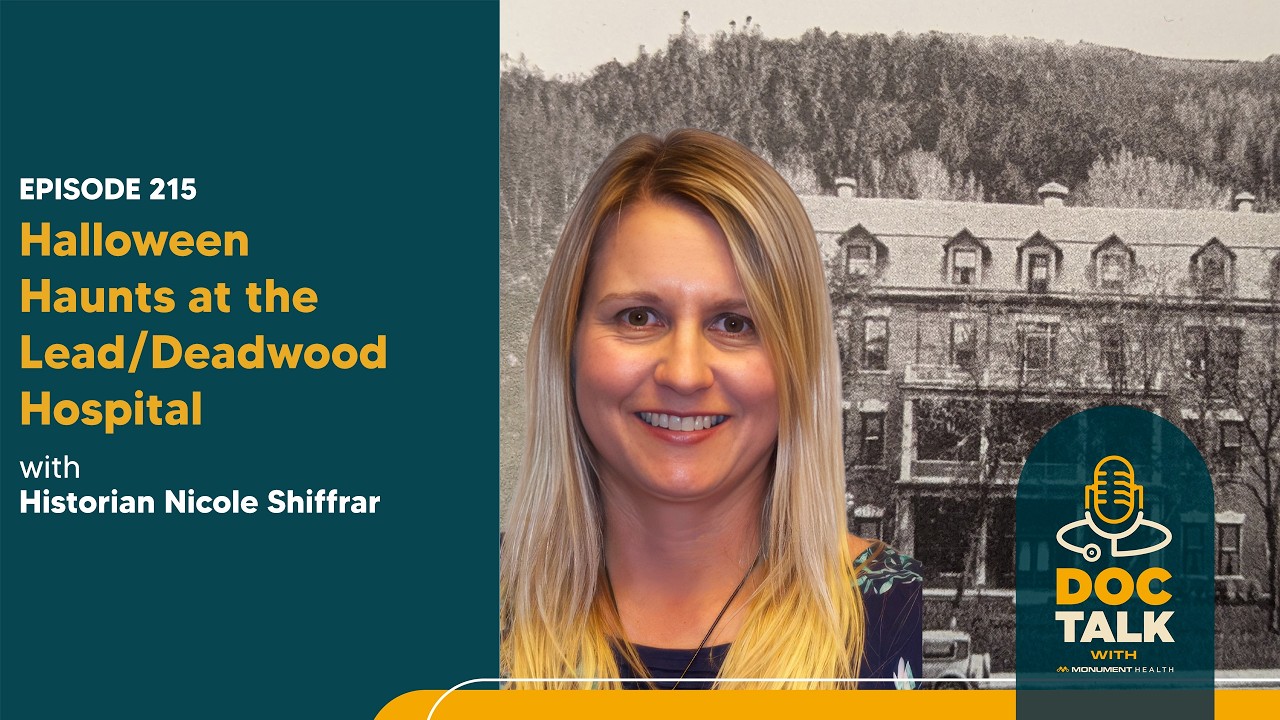

Listen or watch this episode on your preferred platform:


MARK HOUSTON: Are you rolling? All right, I'm just gonna carry this as a backup. Okay, so tell me again how you ended up doing this, doing this job. Why do you do this job?
NICOLE SHIFFRAR: Here at the hospital?
MARK HOUSTON: Yeah, here at the hospital. And just as a historian in general.
NICOLE SHIFFRAR: Well, I have a lifelong. I had a lifelong interest in genealogy. And, uh, when I, I was actually working in law enforcement. And then I ended up working here because I wanted a job where I would be helping people, but I am not very good with blood and all that stuff. So I get to help the people who can do that stuff.
MARK HOUSTON: So is, do you do a lot of hospitals? Do most hospitals have historians?
NICOLE SHIFFRAR: No. Um, so when I first started working here, there was a different CEO. And she said, with your fascination with history, she said, I really think you should go through these boxes of items we have, she said. You know, we have the original medical records going back to 1900. And so she took me into the closet and showed me all the stuff that the nuns had, the hospital had kept over the years.
MARK HOUSTON: And what was it like opening that door and seeing what was in there from 100 and almost 30 years ago?
NICOLE SHIFFRAR: I couldn't wait to open books and start looking through stuff. And we have tons of pictures. We have tons of information. We have stuff that the nuns had written about their time here and their experiences here.
MARK HOUSTON: Did you find stuff down there that was surprising that you, you, I mean, you had to know that there's a lot of old in these boxes, right? There's a lot of history here.
NICOLE SHIFFRAR: Yeah.
MARK HOUSTON: But as you were looking through, did you just, was there anything that stood out?
NICOLE SHIFFRAR: Uh, a lot of the old photographs and the old stories probably, and the medical records. Because back in the late 1800s, early 1900s, the medical record books, uh, the information that they kept, such as, uh, their religion, where they were from, where their, their place of origin was, where they lived. Now their, uh, their job. So there's a lot of neat research information in those books, not just medical information. Yeah.
MARK HOUSTON: So, well, you, you brought us, are we, are we in the basement? Basement? The basement? This is it. And again, we're at the Lead-Deadwood Monument Hospital that goes back. Well, there's pictures. I would encourage anybody to come in and just look at the stuff that you guys have in the lobby, because it's very cool. Yeah. The stuff that you have shown, and this hospital has been in one form or another here since about...
NICOLE SHIFFRAR: 1897.
MARK HOUSTON: 1897.
NICOLE SHIFFRAR: We're the oldest hospital still in operation in the state of South Dakota.
MARK HOUSTON: Really?
NICOLE SHIFFRAR: Yeah.
MARK HOUSTON: Um, I know at one point it was up for a day. Is there more to that story, um, of that little log cabin that was built that was considered the first hospital that's now part of, um, the wood I believe they took to, uh, this, uh, I don't remember the name of, uh, which place they, they reconditioned it into, but where, where was it? What's the story behind that?
NICOLE SHIFFRAR: So the very, very first hospital. So the, the, the rumors that I had heard when I first started working here was the first hospital was in Lead, and it was built by the Sisters of the Holy Cross, which there was a Sisters of the Holy Cross hospital built in Lead. But as I was doing my research for the book, I found an interview with one of the original physicians that worked here in Deadwood, Doctor Babcock. And he relayed the story or, or, you know, about the first hospital and how him and Seth Bullock had tried to build it. And it kept getting torn down and thrown down the hill. And, and they tried in different locations. And then finally they found a location that patients weren't afraid to go to, which was across from White Rocks, kind of down by Cadillac Jack's.
MARK HOUSTON: Okay. Well, the rumor too was that Calamity Jane might have been a nurse there. Is there any history there at all? Or nurse in a whole different term, a whole different...
NICOLE SHIFFRAR: I don't have any proof. I've heard those rumors.
MARK HOUSTON: No. Babcock. Of course he was featured. He was in Deadwood, in a TV show, on Seth Bullock as well. Same thing. Yes. So that, um. How much of that? It's been a while since I've watched Deadwood. Was there a lot of, was, was any of this mentioned in that show at all?
NICOLE SHIFFRAR: I don't know.
MARK HOUSTON: Yeah, I'm not sure either.
NICOLE SHIFFRAR: I don't know. Okay. So Doctor Gregor, he was, uh, he had been a physician here since the eighties. Yeah. And every time he would go to a conference, he would ask me for historical information. And finally he said, you need to write this stuff down because nobody's going to know when you're gone. So that's, that's how the book came about.
MARK HOUSTON: Well, I do want to talk about that. We will talk about that later after we get the tour through the, the hospital here in the basement part. Specifically, you know, how long has this been here?
NICOLE SHIFFRAR: Uh, this portion of the building since about 1953. They started building it in the late forties.
MARK HOUSTON: Okay, excellent. Well, where were you taking us right now as we were walking down?
NICOLE SHIFFRAR: So this is, this is the basement. So this is one of the older parts of the hospital.
MARK HOUSTON: So I'm assuming, I see the kitchen is down here.
NICOLE SHIFFRAR: The kitchen is still here. And we are, um, our kitchen staff still cook meals.
MARK HOUSTON: Okay.
NICOLE SHIFFRAR: From scratch. So, uh, everybody loves the food here.
MARK HOUSTON: Smells good down here. Usually you think you come down to an old dusty, musty basement that it would. But no, it smells delicious for sure.
NICOLE SHIFFRAR: And so these are the original fire doors.
MARK HOUSTON: Oh.
NICOLE SHIFFRAR: Um, actually, we just walked by the old safe, which is one of the only ones left. There used to be three of those in the hospital. There used to be one upstairs in the business office and then another one upstairs too.
MARK HOUSTON: What's kept in there now?
NICOLE SHIFFRAR: Um, just the plans for the hospital, blueprints. Um.
MARK HOUSTON: I noticed that it's open, though.
NICOLE SHIFFRAR: Yeah, but they don't. The inside part is locked.
MARK HOUSTON: Oh, there it is. Okay.
NICOLE SHIFFRAR: The inside of the door is pretty neat, too.
MARK HOUSTON: Yeah, it is. It's beautiful.
NICOLE SHIFFRAR: It's very heavy.
MARK HOUSTON: Well, and I like, on these. So these are the original fire doors, you said.
NICOLE SHIFFRAR: Yes. These are the original fire doors. And these are very, very heavy.
MARK HOUSTON: These are the ones that are made in Minneapolis. Um, Stremmel Brothers, I know. Yeah. I'm spending a lot of time in Minneapolis and that's, that's a name you will see. Yeah. Um, up there for sure. So it looks like more just storage. Well, there's a, there's a, there's a word on the back wall there.
NICOLE SHIFFRAR: Yeah. It's, this really seems to be the materials management office. Simply says Bri. Yes. Please. Breathe.
MARK HOUSTON: So are these doors, I'm sure they're still functional. If something happened, you would still be able to close these and...
NICOLE SHIFFRAR: Well, they automatically shut. They're, they're held open by a magnet. So the magnets are released if the fire alarm goes off.
MARK HOUSTON: And automatically, I mean, just the, the work to put these things together. Have they ever been shut? I mean, because of...
NICOLE SHIFFRAR: And they're very hard to open.
MARK HOUSTON: So what side do you not want to be on when they close?
NICOLE SHIFFRAR: Um. That side. Perfect. Um, so I've got a fun story. Yes. So we'll go down this, this hallway here. So because of the, the ghost tales that we were hearing around the hospital, we decided to appease the spirits. And we did a naming comp, like a naming contest for the Benedict, or the conference room name. And Benedictine Conference Room was chosen. And everybody always asks us why we called it the Benedictine Conference Room, but it was to appease the...
MARK HOUSTON: To the, the nurses, the spirits of...
NICOLE SHIFFRAR: The nuns that were here before us.
MARK HOUSTON: People that work down here. Um, do they choose to or are they assigned this?
NICOLE SHIFFRAR: No, they choose to be down here. This is the best place to work.
MARK HOUSTON: Um, what, what, what was all this like in 1953, or whenever you said it was built? What was it originally used for?
NICOLE SHIFFRAR: The basement. Same thing, same thing.
MARK HOUSTON: Same stuff.
NICOLE SHIFFRAR: Training linens. Um, materials. Uh, we have a shop that the guys did all the woodwork, like in here. They used to build all the cabinets. Uh, yeah, we have a fully operational shop. And we have lots of stairwells.
MARK HOUSTON: Is, what's the latest anybody's done?
NICOLE SHIFFRAR: Uh, EBS is probably some of the, some of the later ones here.
MARK HOUSTON: All right.
NICOLE SHIFFRAR: Uh, this is where our materials office is now, and plant operations. Our shop is in here. So this is the original shop. This has always been the shop, and they just painted the floor. So it's beautiful.
MARK HOUSTON: Oh, it is very nice. You can smell it everywhere from here, it's up.
NICOLE SHIFFRAR: Hi, guys. So this is the original hospital shop where all the magic happens, and the hospital is kept together by a fine gentleman here. Who are...
MARK HOUSTON: Guys, do you ever feel anything down here? Is it creepy for you to work down here? Is it good? Good, good, good.
NICOLE SHIFFRAR: Yeah.
MARK HOUSTON: Yeah, it is a really nice shop down here for sure. Yeah. And I mean, I'm sorry, all of this was built at once? There's no additions down here, anything? Correct? Okay, perfect.
NICOLE SHIFFRAR: Yeah. So I have something else I would like to show you over here. It's the one thing that kind of creeps everybody out. Okay. I told them you were coming, and I told them about this, and they all wanted to see it today. Okay, guys.
MARK HOUSTON: Keep your closed fire exits. So this is. Just. The sound is fantastic. Oh, my. All right. This is where...
NICOLE SHIFFRAR: This is where...
MARK HOUSTON: Every Nightmare on Elm Street movie would start.
NICOLE SHIFFRAR: The crematorium. It used to be.
MARK HOUSTON: Used to be the crematorium. Oh, my.
NICOLE SHIFFRAR: So this is probably the scariest thing in the building.
MARK HOUSTON: So.
NICOLE SHIFFRAR: Um, I don't think necessarily people, but I, you know, if in the old days that they were doing an operation, and to remove your appendix or something.
MARK HOUSTON: Or amputations.
NICOLE SHIFFRAR: Or...
MARK HOUSTON: Just possibly.
NICOLE SHIFFRAR: Everyday garbage or amputations, that sort of thing. Yes. Oh, yeah. Well, that's the, that's the story I heard from the plant ops manager that was here when I started working here, anyway.
MARK HOUSTON: Now see, of everything so far, this feels the creepiest. The creepiest. It does. I could, I could see, because of the pops, the noises, chains. If you were here at night alone.
NICOLE SHIFFRAR: It's really cold. This is the warmest room in the house.
MARK HOUSTON: Amazing.
NICOLE SHIFFRAR: And I'll step in here, just to stand where you're standing, to warm up sometimes.
MARK HOUSTON: But do you turn the lights on?
NICOLE SHIFFRAR: Yes. Of course. I kind of know right where...
MARK HOUSTON: I just thought you, I just thought you would challenge yourself. Be like, let's see how long I can do with the lights off. See what happens.
NICOLE SHIFFRAR: Oh, yeah. This is the boiler room.
MARK HOUSTON: That is so cool.
NICOLE SHIFFRAR: But this is the, the one thing I really wanted to show you down here.
MARK HOUSTON: Awesome.
NICOLE SHIFFRAR: And now you get to see the old, the old door and how heavy they are.
MARK HOUSTON: Yeah, the doors are so cool. Yeah.
NICOLE SHIFFRAR: So do you want to walk up the stairs? Or do you want to go up the elevator to the third floor? You okay?
MARK HOUSTON: Yeah, absolutely.
NICOLE SHIFFRAR: So these stairs are a little bit smaller than your average stairs. We were grandfathered in.
MARK HOUSTON: I suppose there are rules. Yeah, but they now have to be wide.
NICOLE SHIFFRAR: They get bigger as the stairs go up.
MARK HOUSTON: Okay.
NICOLE SHIFFRAR: We call them the stairway.
MARK HOUSTON: The stairway. Now, see, there's another naming thing you should have done. It should have been stairway.
NICOLE SHIFFRAR: The stairway. So this is second floor nursing.
MARK HOUSTON: Where are most of the hospital beds?
NICOLE SHIFFRAR: On second floor. Second floor and Celeste. Physical therapy. Okay. Cardiac rehab. The last. We have reached third floor.
MARK HOUSTON: Excellent. Good. Oh, I messed with the electronics. Huh? The electronics messed with by there.
NICOLE SHIFFRAR: You're welcome.
MARK HOUSTON: Now, that could have been a ghost. I wasn't sure.
NICOLE SHIFFRAR: So Sam, our cleaning guy, when he heard his name called, it was right here.
MARK HOUSTON: What time was it? You know what time he was working?
NICOLE SHIFFRAR: In the morning.
MARK HOUSTON: Okay.
NICOLE SHIFFRAR: Yeah, about three years ago, he said.
MARK HOUSTON: Hey, how are you?
NICOLE SHIFFRAR: We're here for the story. So this used to be. Oh, are you ready? Okay. Too bad Julie's not here. Okay.
MARK HOUSTON: So now that it hasn't been messed with. Yeah.
NICOLE SHIFFRAR: So this used to be our surgery floor. Uh, now it is where our ambulance staff live. We have bedrooms for all of them, and, uh, they have a little kitchen and living room area. So no more surgeries, no surgeries for a couple of years now.
MARK HOUSTON: Do you do any surgeries in the hospital at all? They all go to...
NICOLE SHIFFRAR: We used to do eye surgeries and endoscopy, colonoscopies back in the days before I was here. Um, before I first started here in 2010.
MARK HOUSTON: Right.
NICOLE SHIFFRAR: Uh, they did do other types of surgery, but that was long before I got here.
MARK HOUSTON: The, the vibe up here is a little different, too. Mhm. Um. And maybe that's why. That's why. Because the first step...
NICOLE SHIFFRAR: I had a really scary thing happen to me here. And it was not a ghost story. So I came up here, all the lights were off, and it's really dark when it's, when the lights are off up here. And I came off the elevator and these guys had put the dummy in the wheelchair right there. And when the lights are on, I mean, I screamed and, oh my God.
MARK HOUSTON: That's fantastic. I love the, the, the tile that's on the inside of there, too.
NICOLE SHIFFRAR: Oh, just wait till you see the room back here.
MARK HOUSTON: Okay. That's, I mean, to me, if anything feels like an old...
NICOLE SHIFFRAR: Green.
MARK HOUSTON: That institution green, the tile. Yep.
NICOLE SHIFFRAR: Yeah.
MARK HOUSTON: All of that. I mean, it's actually, it's, it's the term institution green just makes it sound so. But it's true. It is. But it just, to me, that, that's just a calming color too, you know, the blues and those sea greens like that. And institution in Florida. All right.
NICOLE SHIFFRAR: It's supposed to be a soothing color. Yes. Yes. So these are all the bedrooms for the paramedics. And then this is their living room area.
MARK HOUSTON: Oh.
NICOLE SHIFFRAR: So this used to be the recovery room. So this is where the recovery beds were.
MARK HOUSTON: If it were in this area, all kind of still set up. Yeah. Yeah.
NICOLE SHIFFRAR: You can see there is. Yeah.
MARK HOUSTON: It's nice up here.
NICOLE SHIFFRAR: Really. Yeah. No, it's a nice space for these guys.
MARK HOUSTON: Yeah.
NICOLE SHIFFRAR: We have a big crew because we do a lot of transfers.
MARK HOUSTON: And how are they? So they have to be on site, then? They have to be...
NICOLE SHIFFRAR: They do 24-hour, 24-hour shifts. Yep. And we have a big crew. So they cover all the way to the Wyoming border. And then...
MARK HOUSTON: Oh, wow.
NICOLE SHIFFRAR: Yeah. They do, uh, Boulder Canyon, and they have a lot of area they cover. Plus they do a lot of out-of-state transfers and in-state transfers, so.
MARK HOUSTON: Sorry. Not anymore.
NICOLE SHIFFRAR: They are a big group.
MARK HOUSTON: Reunion. Yeah. Leave the gate open.
NICOLE SHIFFRAR: So here's the kitchen.
MARK HOUSTON: Oh, my.
NICOLE SHIFFRAR: Look at this. The old paint color. So this is, this is the training room.
MARK HOUSTON: Here we go. Oh, yes. So. All right.
NICOLE SHIFFRAR: This is the training room.
MARK HOUSTON: That is very lifelike.
NICOLE SHIFFRAR: Uh, yeah. Tell me about it when it's in a wheelchair, when you get off the elevator in the dark. I thought it was real.
MARK HOUSTON: Oh. Oh, no. Ma'am. Ma'am, I don't feel anything. I just want to do everything I do in the movies. I'm not getting, I'm not getting a pulse out there. I think she's, I don't think she's going to make it. I mean, if she sat up right now, I'd run out of this damn room so fast. Wow. That's, that's amazing. Amazingly lifelike.
NICOLE SHIFFRAR: Yes. And if you come into the dark area and not expect it to be somewhere where it is, it's a little...
MARK HOUSTON: Well, and then just walking into this, just on the floor.
NICOLE SHIFFRAR: Yes. Can be a little frightening if you don't know where you're at.
MARK HOUSTON: But.
NICOLE SHIFFRAR: Yes, this was one of the operation rooms. Yeah. So now it's a training room. The other operation room is a storage across the hallway here. You can see the ridiculously creepy. This one might be a little creepier because it has a green tile, but it's full of, full of. This is the storage.
MARK HOUSTON: Boy, if ever you were going to film a local horror movie in a hospital, man, this would be the room to do it in.
NICOLE SHIFFRAR: Did you know that Ghost Hunters wanted to do a show here?
MARK HOUSTON: Did they?
NICOLE SHIFFRAR: Really. They did, in 2011.
MARK HOUSTON: What happened?
NICOLE SHIFFRAR: Uh, they don't have a lot of detail.
MARK HOUSTON: Just because of...
NICOLE SHIFFRAR: Because of...
MARK HOUSTON: Patients. Makes sense, I get it. Yeah. Totally understand. Yeah.
NICOLE SHIFFRAR: This was another operation room. And there's the green. And then here's the original surgical scrub sinks. And I have pictures of doctors actually at the sink scrubbing in.
MARK HOUSTON: Really?
NICOLE SHIFFRAR: I do. I actually put one in my book under Doctor Byford. Anderson.
MARK HOUSTON: Is it...
NICOLE SHIFFRAR: Yeah. And they were scrubbing. She was scrubbing and, yeah. And he was, he was looking up like this. Yeah, it's, it's a little scary when it's dark.
MARK HOUSTON: I can imagine that. About midnight, one o'clock in the morning. Yeah.
NICOLE SHIFFRAR: Oh, yeah. When I used to work security for the rally on occasion, this was always my least favorite place to go.
MARK HOUSTON: Yeah. This and the low ceilings, also.
NICOLE SHIFFRAR: It's got the old hanging feeling now. Yeah.
MARK HOUSTON: Did they have to, did they have to move everything out of here just because of updates and rules and, you know, safety?
NICOLE SHIFFRAR: And we didn't, I think because we didn't have a physician that was going to be doing endoscopy and colonoscopy anymore. Yeah. Got it. And that was the last type of surgery we were doing here.
MARK HOUSTON: Okay, so when, when did that end?
NICOLE SHIFFRAR: Just a couple of years ago.
MARK HOUSTON: Oh. No kidding. Yeah. All right. Well, that's fun. Yeah. Yeah. This is, this is pretty neat.
NICOLE SHIFFRAR: You're welcome. That's right. Back down there. Another stairway.
MARK HOUSTON: The stairway.
NICOLE SHIFFRAR: There is just the roof.
MARK HOUSTON: That's where the, I'm assuming the woman in white stands waiting for her lover to return.
NICOLE SHIFFRAR: You never know.
MARK HOUSTON: Before she jumps. Like, pretend to die.
NICOLE SHIFFRAR: But yeah. So this, this is the second floor because...
MARK HOUSTON: We got the Thanksgiving tree up.
NICOLE SHIFFRAR: Yeah. So physical therapy down the hallway here. So this is all part of the original building. So we'll stay off the nursing floor. But that's down this way.
MARK HOUSTON: When were the elevators put in?
NICOLE SHIFFRAR: This is an older elevator here, and probably in the fifties.
MARK HOUSTON: Okay. So it's been a, that's...
NICOLE SHIFFRAR: It's been a while. Yeah. A little waiting area.
MARK HOUSTON: Yeah. The waiting area is very, I mean, it's, it's, it's still, you can feel the history here. You can feel. But at the same time, it doesn't feel...
NICOLE SHIFFRAR: You know what's really neat is we have windows that still open.
MARK HOUSTON: The ones that go that way. Like you're in Europe.
NICOLE SHIFFRAR: Yeah. So we get fresh air here.
MARK HOUSTON: Oh, it's a great view here, too.
NICOLE SHIFFRAR: Yeah.
MARK HOUSTON: You're gonna see right down through the gorge there a little bit.
NICOLE SHIFFRAR: Yeah. So all the windows. Yeah. All the windows still open.
MARK HOUSTON: Oh, that's so neat.
NICOLE SHIFFRAR: Yeah. We'll go back down to the first floor, probably. I love getting married down there.
MARK HOUSTON: How many patients can be here at any given time?
NICOLE SHIFFRAR: We have 18 beds.
MARK HOUSTON: 18.
NICOLE SHIFFRAR: And this is a swing bed hospital that we are licensed for 18 beds. We have a couple ICU rooms.
MARK HOUSTON: Okay.
NICOLE SHIFFRAR: And...
MARK HOUSTON: Do you have a place for, can a helicopter come up here?
NICOLE SHIFFRAR: Oh, yes. We have a helipad at the top of Boulder Canyon.
MARK HOUSTON: Okay.
NICOLE SHIFFRAR: So they have to land there and then...
MARK HOUSTON: Come back down.
NICOLE SHIFFRAR: Our ambulance will transport to helicopters.
MARK HOUSTON: Excellent.
NICOLE SHIFFRAR: So. And then down this way is our ER hallway.
MARK HOUSTON: Okay.
NICOLE SHIFFRAR: And then administration is actually in the old mental health ward.
MARK HOUSTON: How long was that in play here?
NICOLE SHIFFRAR: I am not 100 percent certain how long the mental health department was there.
MARK HOUSTON: Did a lot of hospitals at the time, did they have just a unit for that as well?
NICOLE SHIFFRAR: I believe so.
MARK HOUSTON: Purely for mental health. Yeah.
NICOLE SHIFFRAR: Did I show you the old morgue?
MARK HOUSTON: No.
NICOLE SHIFFRAR: This is the old morgue, and it's got the old, creepy green floor. So now this is our, this is where we store sharps and garbage now. But it's so tiny. It used to be enough room to put three, roll three bodies, bodies in here. And this is where they were stored until they were picked up by the coroner.
MARK HOUSTON: At the floor.
NICOLE SHIFFRAR: Mhm. This is part of the original flooring.
MARK HOUSTON: Every horror video game I have ever played, this floor has this floor. I love it. See, in here. I know it did start to go wonky.
NICOLE SHIFFRAR: I just needed to take you in the right room.
MARK HOUSTON: Just because all I had, I wanted you to see the floor. Sorry. His camera's not working now. Look at that. Look at that. As soon as we walked, as soon as we walked into the morgue room, it went. It.
[Camera trouble and crew setup chatter trimmed. Recording resumes in the lobby.]
NICOLE SHIFFRAR: It's not crazy busy right now. We can sit out here now. Okay. Do you want me to get my book with some of the older pictures and stuff?
MARK HOUSTON: You absolutely could. Yeah, I mean, that would be fantastic.
NICOLE SHIFFRAR: I have a binder with some pictures that weren't in the book.
MARK HOUSTON: Okay. Yes, because the light's coming right in through here, too.
MARK HOUSTON: I honestly, I thought it would be probably be a little creepy, as creepy.
NICOLE SHIFFRAR: Maybe the camera didn't...
MARK HOUSTON: But it's all the storage. I know those are going to be cool. And that just, that creepy picture of the surgery. Yeah, you have to get that one.
NICOLE SHIFFRAR: So look at this.
MARK HOUSTON: Oh my God. I love that.
NICOLE SHIFFRAR: That's got the horse and buggy.
MARK HOUSTON: And this is, so this would have been working this way? Well, like, how would I be...
NICOLE SHIFFRAR: It would have been this way.
MARK HOUSTON: This way.
NICOLE SHIFFRAR: I'll show you.
MARK HOUSTON: Okay. Just. Yeah, just to help me get it.
NICOLE SHIFFRAR: I have a picture that'll help you get your bearings. Okay. To get my bearings here. So. Okay. Oh, so this is our X-ray wing here, coming off the ER. Yep. Right here. And this is when it was being built. Oh, and this is the old hospital being tore down, so you can see the X-ray wing. And then here's the clinic now. So that's right where the old part. Oh, I see.
MARK HOUSTON: Got it? Yeah. Perfect.
NICOLE SHIFFRAR: That picture always helps make it make sense.
MARK HOUSTON: Yeah, it does. Totally.
NICOLE SHIFFRAR: And then. So this is, so here's the X-ray wing that was added on. So this is where the old hospital was attached. That barn section that you see in that picture.
MARK HOUSTON: Right.
NICOLE SHIFFRAR: It was attached to the end of this. And then it went on. And then it was the old, the old building. So that's all now. So then they added this wing on and the breezeway, and then they added the clinic.
MARK HOUSTON: Okay. Ah, that's so cool, I love that. I mean, that's just building-wise alone in Deadwood, it has to be one of the older, I mean, brick and mortar buildings, isn't it?
NICOLE SHIFFRAR: Yes, yes. It's, if the old part of the building was still here, it would definitely be one of the older. I think we beat Sacred Heart Hospital by like six months.
MARK HOUSTON: Really?
NICOLE SHIFFRAR: That'd be an old, yes. Yeah.
MARK HOUSTON: Well, when did, when did your book come out?
NICOLE SHIFFRAR: Uh, for our, uh, 125th anniversary.
MARK HOUSTON: Okay.
NICOLE SHIFFRAR: So I'm trying to think. And that was, that was a few years ago now. 1897 plus 125.
MARK HOUSTON: Did you, did you enjoy writing it? Was it something that was...
NICOLE SHIFFRAR: I did, yeah. So here's a piece of the original wallpaper. So I've saved some of the mementos over the years so people can enjoy those. And then we just recently, this year, we added all of the nursing capes, so people have donated those to me over...
MARK HOUSTON: Oh, really?
NICOLE SHIFFRAR: So I work with the museum, and, um, I said, well, we'll donate all this stuff to you, but we've got to display it here.
MARK HOUSTON: Right? Yeah, for sure.
NICOLE SHIFFRAR: But that way it's cared for by them, and it's forever in our, you know, Deadwood's history.
MARK HOUSTON: But I mean, the tea set and everything, too, is amazing.
NICOLE SHIFFRAR: That was the nuns' tea set.
MARK HOUSTON: That was very cool.
NICOLE SHIFFRAR: Yeah. And then this came from, um, Bob Phillips. Uh, he used to be up at the Black Hills Mining Museum, and he is the one who organized all of our historical records here at the hospital for us.
MARK HOUSTON: Okay. 1910.
NICOLE SHIFFRAR: Mhm.
MARK HOUSTON: Well, now, is this, is this, I noticed this, Doctor Smiley. Was he the one that worked, yeah, downtown?
NICOLE SHIFFRAR: He did. And he also worked within this hospital.
MARK HOUSTON: Okay. So because I used to work a long time ago, I worked when Kay Starr was still in that building. Yeah. And they still had the door that said Doctor Smiley. Yeah. And that was him.
NICOLE SHIFFRAR: Yeah, it was him. And then Doctor How, he was one of the, actually you can see his autograph on there. But he was actually the mayor of Deadwood, too. Four.
MARK HOUSTON: Oh, you're kidding.
NICOLE SHIFFRAR: And then Doctor Schnier, of course. And he still has a lot of family here in town.
MARK HOUSTON: Nearer home.
NICOLE SHIFFRAR: Mhm. And this was Doctor Smiley's kit. And then Doctor Hall wrote this book, and I actually bought this book myself, but it's autographed by the doctor. So I donated it to the museum just to have that autographed copy within the museum. But they displayed it here.
MARK HOUSTON: That is great. Yeah. I used to work 10 p.m. to three in the morning. And so, alone in that building one night.
NICOLE SHIFFRAR: And then this was the linen marker, where they would take Saint Joseph's Hospital and stamp it on the, oh yeah, on the, yeah. That's where they. And you can see that one. Yep. It was one of the old linen shirts, and they would stamp it with that. And then this was the original baby, the baby's arm. Yeah, yeah. And I have the historical medical record book, you know, and I've been archiving them. So from 1900 to 1922, we have a database that's searchable for people doing genealogy. Uh, and I was, I was actually able to pull, because 1906 was when they started keeping records. Yeah. That's, and, and such. So I was able to pull, uh, uh, a report on the deaths prior to 1906 within the hospital and give that to the city for people doing Aids or whatever.
MARK HOUSTON: Okay.
[Crew setup chatter trimmed. Sit-down interview begins.]
MARK HOUSTON: Okay. Awesome. Are you ready? Here you go. Hello, everybody, and welcome to a very strange issue of Doc Talk right now. I'm so excited to do this, though. Thank you very much, Nicole, uh, Shiffrar, who is here, the historian with Monument Health Lead-Deadwood Hospital and Clinic, which is where we are right now, in this beautiful entrance to the whole thing. Um, uh, thank you for doing that and doing this. Yeah, I appreciate it. Thank. Um. I want to, um, start this. You have spent, I would assume, countless hours reading old registers from the hospital, from Saint Joseph's, back when it was Saint Joseph's, even before it was the academy. Right. Um, I think a lot of people would call that a red flag.
NICOLE SHIFFRAR: No, honestly.
MARK HOUSTON: Um, how, how did you get started in doing something like this?
NICOLE SHIFFRAR: Uh, well, I thought it was important to document the history that was the, uh, community that's based around history and brought us, you know, into that group of, um, historical places here in Deadwood.
MARK HOUSTON: Well, are you, are you from here, then? I mean, do you, you trace your history back to this?
NICOLE SHIFFRAR: Yes. My, my family came to the Black Hills, my grandfather, in 1875.
MARK HOUSTON: Wow.
NICOLE SHIFFRAR: He was a placer miner, so. Yeah.
MARK HOUSTON: So you must, you have that interest, obviously. Yeah. Look back into genealogy, and to find, how far back have you ever gone with your own family history? Do you know?
NICOLE SHIFFRAR: Uh, yeah. In the 1600s, something like 1500. Yeah.
MARK HOUSTON: So where were, where did they come from? Where? Where are you from?
NICOLE SHIFFRAR: Uh. My ancestors?
MARK HOUSTON: Yes.
NICOLE SHIFFRAR: So different parts of my family were from Germany. Okay. Um. And Sweden. Norway. Yeah. And then on my dad's side, they were all, uh, Louisiana. So more French Acadian.
MARK HOUSTON: Oh, man. That's a good mix, though. Really? Yeah. Um, well, this, this hospital, I know, I think dates back to, because I have been, I, I was just enamored with, you have a picture. There's a lot of pictures in the, in the lobby here. And I would encourage people, I mean, even if they're not sick, respectfully come in here and look around. Right. To see the history, a little bit about what this hospital has. Yeah. So there's pictures of the old hospitals behind us. Um, creepiest picture I've ever seen on the wall there, with that actual surgery taking place. Yes. But next to it is what some would consider to be the very first hospital. And it is no bigger than this lobby, I don't think. It...
NICOLE SHIFFRAR: Was probably smaller than this.
MARK HOUSTON: Probably was. Right. And from what I learned about it, it got torn down on the same night that it went up, right?
NICOLE SHIFFRAR: Several times.
MARK HOUSTON: Um, do you know what happened to, I had read that the lumber got rebuilt into Spruce Gulch. Did you ever, did you see or come across that?
NICOLE SHIFFRAR: Uh, yep. And then the sisters' hospital went into the school. So when they opened the sisters' hospital in Lead, they repurposed that lumber for the school at the made. So that happened frequently.
MARK HOUSTON: I was going to say, I'm assuming if it got torn down, you didn't, you know, throw it out like you did now and raised it, right? Um, Deadwood Dick, somebody that died here.
NICOLE SHIFFRAR: He was. Yes. He was a patient here.
MARK HOUSTON: Um, Seth Bullock had a hand in the early hospital. Yeah. Lots of these characters that we've seen from the show Deadwood.
NICOLE SHIFFRAR: Yeah. Um, Peter Norbeck was another patient that was here.
MARK HOUSTON: Really?
NICOLE SHIFFRAR: Yeah.
MARK HOUSTON: So that's a big list of famous people that have been here, for sure. Um, is, is, is this, was this, I'm assuming it was just the Wild West waiting room at some point, right? There had to be great stories that happened here.
NICOLE SHIFFRAR: I'm sure there was. Uh, the hospital here opened in 1897. So, uh, the building had been here since 1878. It was, uh, Saint Edward's Academy prior to being a hospital.
MARK HOUSTON: What does that mean? What did, what did an academy mean? An academy mean? Before it became a hospital?
NICOLE SHIFFRAR: It was a school for children. Okay, so Saint Edward's Academy was a school for children. That was in the original part of the hospital prior to becoming a hospital. And then they purchased the building and opened it as a hospital in 1897.
MARK HOUSTON: Now, was it, because a lot of the pictures here do have nuns in the picture. Were they part of the academy? Were they, like, the teachers for the kids?
NICOLE SHIFFRAR: The Benedictine? Yes. So the Benedictine Sisters. But it was the Sisters of the Holy Cross that ran Saint Edward's Academy.
MARK HOUSTON: Is that significant?
NICOLE SHIFFRAR: A different, uh, a different church.
MARK HOUSTON: Oh, okay.
NICOLE SHIFFRAR: Yeah. So the Sisters of the Holy Cross, when they left Deadwood, they turned it over to the Benedictine Sisters, who came from Austria.
MARK HOUSTON: Oh, okay.
NICOLE SHIFFRAR: So. And the Benedictine Sisters also ran the academy for children in Sturgis, which was another big children's school. Uh, and I believe they had one in Rapid City, too. And then they had Saint John's Hospital in Rapid City. So.
MARK HOUSTON: Now, you mentioned that this is also probably the oldest hospital in the state. Correct?
NICOLE SHIFFRAR: The oldest hospital in the state still in operation.
MARK HOUSTON: Still in operation. Got it. Okay. Um, let's go back, if you can, to 1905. Okay. And I want to, what would it look like if some guy's up there panning for gold, right, it's going to do something stupid. You know, he has probably found a giant nugget, got super excited, slipped and fell. Okay. Broke something. What would it look like when he walked into a hospital like that?
NICOLE SHIFFRAR: Ah, well, you would have approached the nuns first. They would have got him into the dressing room or the operation room, which looked like that picture, because that was from 1908, right? That picture would have been what you would have seen if you needed an operation, right? Yeah.
MARK HOUSTON: Chances of survival?
NICOLE SHIFFRAR: You know, actually, for the few gunshot wounds that I had seen, pretty much all of them survived. It's pretty incredible.
MARK HOUSTON: But was the, was there a lot? I mean, the room, you know, there's always the, the old West shootouts in the middle of the street were mostly a myth, right? They weren't. No. They were. Okay. Did it happen a lot here in Deadwood? Really? Yeah. And so people could come in with gunshots. Obviously, they weren't great shots, because they didn't hit anything enough to kill you. But still surprising.
NICOLE SHIFFRAR: Well, you know, I, I had actually read a story about a gentleman who was shot through the neck. The ball ended up at the back of his, came out the back of his neck, and he survived. So. Yes.
MARK HOUSTON: Yeah. Um, I read, uh, a story about a baby who drank lye that ended up here.
NICOLE SHIFFRAR: Oh, yeah. Um, for that one.
MARK HOUSTON: Frostbite so bad, it probably meant, you know, an amputation. Yeah. Um, is there a record that you ever came across that really stuck with you? I mean...
NICOLE SHIFFRAR: There were, there were a lot of appendectomy operations here, and then the iron lung. The iron lung, the first iron lung in the state of South Dakota. And actually that iron lung was restored. It was found in a junkyard and it was restored. And it was displayed in our lobby for, for years.
MARK HOUSTON: Where is it now?
NICOLE SHIFFRAR: Uh, the gentleman that, uh, had it restored, it was on American Restoration on TV.
MARK HOUSTON: Yes.
NICOLE SHIFFRAR: And he wanted to sell it.
MARK HOUSTON: So why war? Appendectomy. Such a dude, I mean. Yeah. So.
NICOLE SHIFFRAR: Um, a lot of people weren't getting their appointments.
MARK HOUSTON: It seems like back then, though, we, we ate a lot better than we do now. Not so much fast food. Um, that's very surprising, because the picture you have in here that I, like I said, is just a creepy photo, is a doctor, uh, a patient, uh, a nun, um, some assistants, it looks like, uh, the patient's wife that is standing right next to him as the operation is happening, with the bare light bulb coming down. You have to come see the picture that's in here. And they're doing an appendectomy on this patient in here.
NICOLE SHIFFRAR: Like a rubber gloves on.
MARK HOUSTON: And I'm assuming the guy survived. I mean, I'm, I would, I would think that he absolutely made it through the surgery, but it's just the doctor turning around and looking like, what the hell is a camera doing in this room? I mean, even now, a doctor would say the exact same thing. Doctor Alan, is he, was he somebody that was notable here at this hospital?
NICOLE SHIFFRAR: Yes, he was. He was one of the very first physicians that worked within this hospital, Doctor Alan. And he actually left here and went and worked for a laboratory. And in the book, in the book that I wrote, yeah, I talk about him, because he sold his invention to the Tampax company. Tampon. He was one of the inventors.
MARK HOUSTON: Are you kidding?
NICOLE SHIFFRAR: Yeah. No, I'm not kidding.
MARK HOUSTON: I love that story. Um, you did mention that you did write a book. What is the name of it?
NICOLE SHIFFRAR: Uh, The History of Health Care in Lead and Deadwood.
MARK HOUSTON: Okay. And where can we find it? Anywhere?
NICOLE SHIFFRAR: Hopefully I have some here.
MARK HOUSTON: You do? You can come to the hospital and get some, if somebody wanted to buy a copy. Mhm. Okay. Awesome.
NICOLE SHIFFRAR: Yeah. And they actually just put it online. So you, there's a QR code, so you can read it in a digital format on the Monument Health website.
MARK HOUSTON: Oh, awesome. Okay, um, let's talk a little bit about the fall of 1918, though, too, because that would have been when the Spanish flu rolled...
NICOLE SHIFFRAR: Through. Spanish influenza. So in archiving all of those historical medical records, I made all of that data searchable. So I was able to search all the la grippe and Spanish influenza cases. I want to say 118. I can't remember the exact number, but I think it was 118 that were treated at this hospital. That doesn't mean that, how many were in pound, but that's how much, how many were treated here at this hospital.
MARK HOUSTON: I mean...
NICOLE SHIFFRAR: They talked about the need to open the windows that we, we did upstairs. Um, and the fresh air was important. And during that time, and he, he remembered, one of the physicians said that they had patients hanging up the, hanging out the windows to get fresh air.
MARK HOUSTON: It's surprising, because obviously that was a, I believe that was a, a condition that started on the, on the coasts, right? Um, and then moved its way inward.
NICOLE SHIFFRAR: There were sporadic cases leading up to it. And then after, even.
MARK HOUSTON: Surprising, though, on how long it took to get from one side of the country to the middle, that even that many cases could make it out here. And I guess that's just how contagious it was at that time. Yeah. Did it, did it, I saw in, in what I looked up, there were 40-plus, probably around 40-plus people that passed away, um, inside, like, about October, November. Does that sound about right?
NICOLE SHIFFRAR: Yeah. Approximately. Well, here at our hospital.
MARK HOUSTON: Yeah, exactly. Well, if there was any lingering energy, to me it would feel like it would be from the Spanish...
NICOLE SHIFFRAR: Spanish.
MARK HOUSTON: Absolutely.
NICOLE SHIFFRAR: That's probably one of them.
MARK HOUSTON: Um, another, um, I think pretty interesting person who worked here in the hospital was, uh, Doctor Flora Hayward Stanford. Um, the only woman doctor in Deadwood in the 1880s. Yes. And I believe she had a, she was, she was a, a part of women's suffrage.
NICOLE SHIFFRAR: Yeah. They would typically have office, out an office outside of the hospital where they would see patients as well. But they would perform operations and do stuff within the walls of the hospital. Same thing with the veterinarian. Uh, Doctor Leslie was the veterinarian at the time. And he was also a bacteriologist. And so she, but he had a laboratory here within the hospital. So he would run his labs here at the hospital. But he was working outside of the hospital more. But he had a lab here.
MARK HOUSTON: It feels like there was a fair amount of firsts that have happened in this hospital.
NICOLE SHIFFRAR: Yes. And we were also the first nursing school West River, here.
MARK HOUSTON: Really?
NICOLE SHIFFRAR: So it opened in 1906.
MARK HOUSTON: Why was, why was the first iron lung that got out here, why, why did it end up here? Why didn't it end up in Rapid City or Sioux Falls for the state?
NICOLE SHIFFRAR: Well, at that time, Deadwood was the center of the world up here. Mhm. Um, this is where the majority of patients came to be treated, where most of the babies were born. This was the probably most heavily populated area at that time.
MARK HOUSTON: I suppose that makes sense.
NICOLE SHIFFRAR: And people traveled from other states to come see the sisters up here in Deadwood. Okay. So they were very, very well known for their, their care.
MARK HOUSTON: Well, you also have a picture behind us, too, of the iron lung with a person in it. Um. I believe it was used on a, I mean, a handful of people. That's why. Yeah. You know how long it was in use for?
NICOLE SHIFFRAR: Uh, 1937 for sure. I don't know when it went out of service, but I know that it went to Spearfish. So it was used in other hospitals. It wasn't just used in this particular hospital.
MARK HOUSTON: Okay.
NICOLE SHIFFRAR: Uh, there was a patient, um, that was in the, it was in the newspaper, but her name was very unique. And I believe she was 17 at the time. And she, she was one of the first people to use that iron lung.
MARK HOUSTON: Is she the one? She's not the one in the picture, though, is she? I know her name sounds familiar, but I can't remember her picture. But again, this, this, just walking in here to look at some of the history. I mean, around this, there's, there's tables here with surgical equipment. Yeah. Uh, that the hospital used. I mean, very old equipment going back to the early 1900s, next to you. And then, of course, um, you were telling me a little bit about, um, the nursing and the uniforms and the donations there.
NICOLE SHIFFRAR: Yeah. Nursing capes that, uh, nurses that attended the nursing, Saint Joseph's School of Nursing, had worn. The families have been bringing them in and donating to the, to the hospital. All of the, the wear, and their hats, the hats, the coats, the diplomas.
MARK HOUSTON: We have the entire ledger there, of all of the nurses that completed, the graduates. They were written in that ledger. Yes. Has anybody ever come up that their name might be in there and have ever wanted to see it? If they had anybody come up and ask, family members? Yeah. Okay.
NICOLE SHIFFRAR: Family members, especially when they come and donate the nursing capes. And then we'll be able to show them there.
MARK HOUSTON: So you can take it out of there and open it up?
NICOLE SHIFFRAR: And, well, we, we can, but we don't open, now that we've donated them to the museum. They, they just, everything stays in there.
MARK HOUSTON: Um, yeah, it would be really creepy to see one of those living around the hallways as well down here, for sure. Um, well, Nicole, this has been, uh, I mean, this has been a very cool tour you have taken us on. And again, I would encourage people to get your book if they want to know more about this history in general, because Deadwood is obviously famously historical. Um, for the, for the names that have gone through, for the show that made it even more popular. But it's fun to come into the little places around the town that hold that history too, that you don't really think of. Because I don't think, I mean, people have always thought, well, there's a hospital, of course, but then just to know what's come through, and the names you've mentioned of people that have gone on to bigger and better things too, that have come out of here as well.
NICOLE SHIFFRAR: A lot of, a lot of things that went on to be very big things.
MARK HOUSTON: Do you have an absolute favorite story about this place, um, that you think about quite a bit, that you would like to tell?
NICOLE SHIFFRAR: Um, you know, I, I really enjoy the patient stories, how much they appreciate the fact that they can read about the history, because they come to this, this town and everything's about the history of the area. And when they come in here, I mean, it's terrible that they have to be a patient on their vacation. But the stories that, that they, uh, they go home with, and, uh, when I'm able to give them a copy of the book and show them about the whole story, they just love it. So.
MARK HOUSTON: Well, I mean, I guess if we're going to be sick or be hurt, there would be a lot worse hospitals to be in. At least this gives you something to look at. And, I don't know, maybe something to be a little scared of at night, too, when it gets creepy. I don't know. Anyway, you're going to take us downstairs as well, uh, to show us, um, some of the more, uh, eerie parts of the hospital, because of how long it's been here and the history that it's gone through. And we're going to talk a little bit about some of the experiences that you've had here as well, which I think will be a blast. All right. Well, thank you, Nicole, and, uh, let's head downstairs and see what happens. Okay.
NICOLE SHIFFRAR: Yes. I think that's the perfect ending.
MARK HOUSTON: But Nicole's just facing the corner. She's just turned away. It's just like my leg next to the dummy's leg upstairs. Yeah. Just, you just show her their leg, and then it's mine. And they're going...
NICOLE SHIFFRAR: And then we recreated all the historical postcards. So there's four different ones. So those were all original postcards from this, and PR marketing put those together for us. So we hand these out for free at the front desk at all times.
MARK HOUSTON: Yeah, that is great.
NICOLE SHIFFRAR: If anyone wants a book, I have some here. I will get you one.