
Spearfish Teen Alison Cooper is Back in the Air After Being Sidelined by a Hip Injury
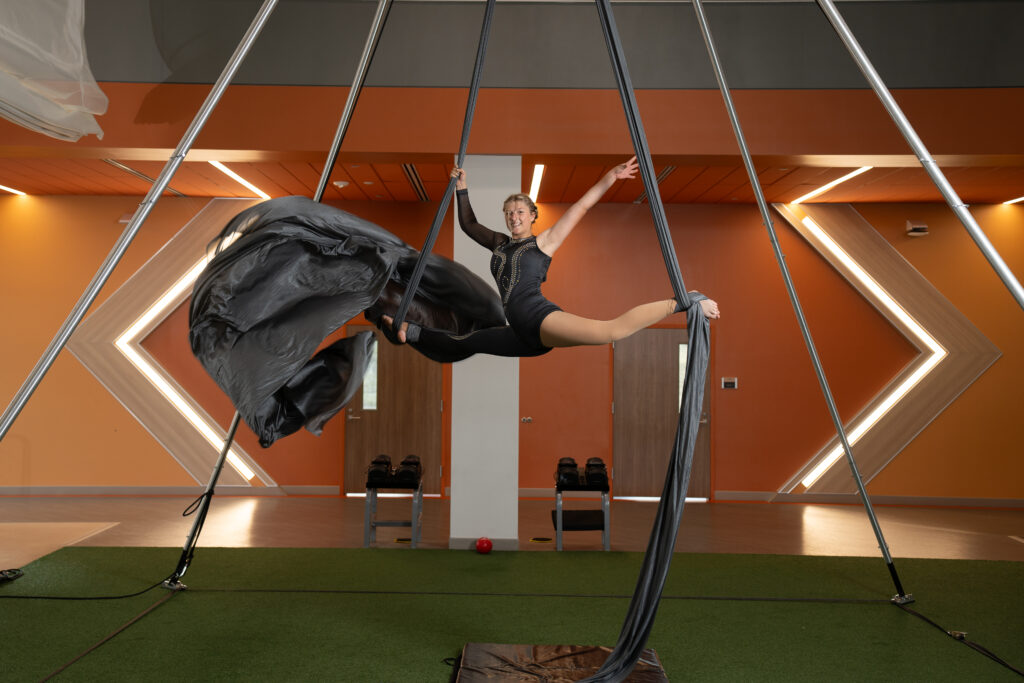
Alison Cooper is not one to take things slow.
The Spearfish High School junior juggles life as a cheer captain, horseback trail guide at Andy’s Trails in Lead and aerial acrobatics performer. But when pain in her left hip began to limit her active lifestyle, she turned to David Woodard, M.D., for answers.
“I was at a football game my sophomore year and I was doing a jump and that’s when I hurt my hip. I couldn’t lift my foot above the ground more than a foot or it would hurt really bad,” Alison said. “I went to a chiropractor hoping I just needed an adjustment, but when that didn’t help my athletic trainer referred me to Dr. Woodard. I just wanted to feel better.”
Dr. Woodard, an orthopedic surgeon at Monument Health Orthopedic and Specialty Hospital (MHOSH), diagnosed Alison with a labrum tear and femoroacetabular impingement (FAI), a painful condition that occurs when the hip joint doesn’t articulate properly.
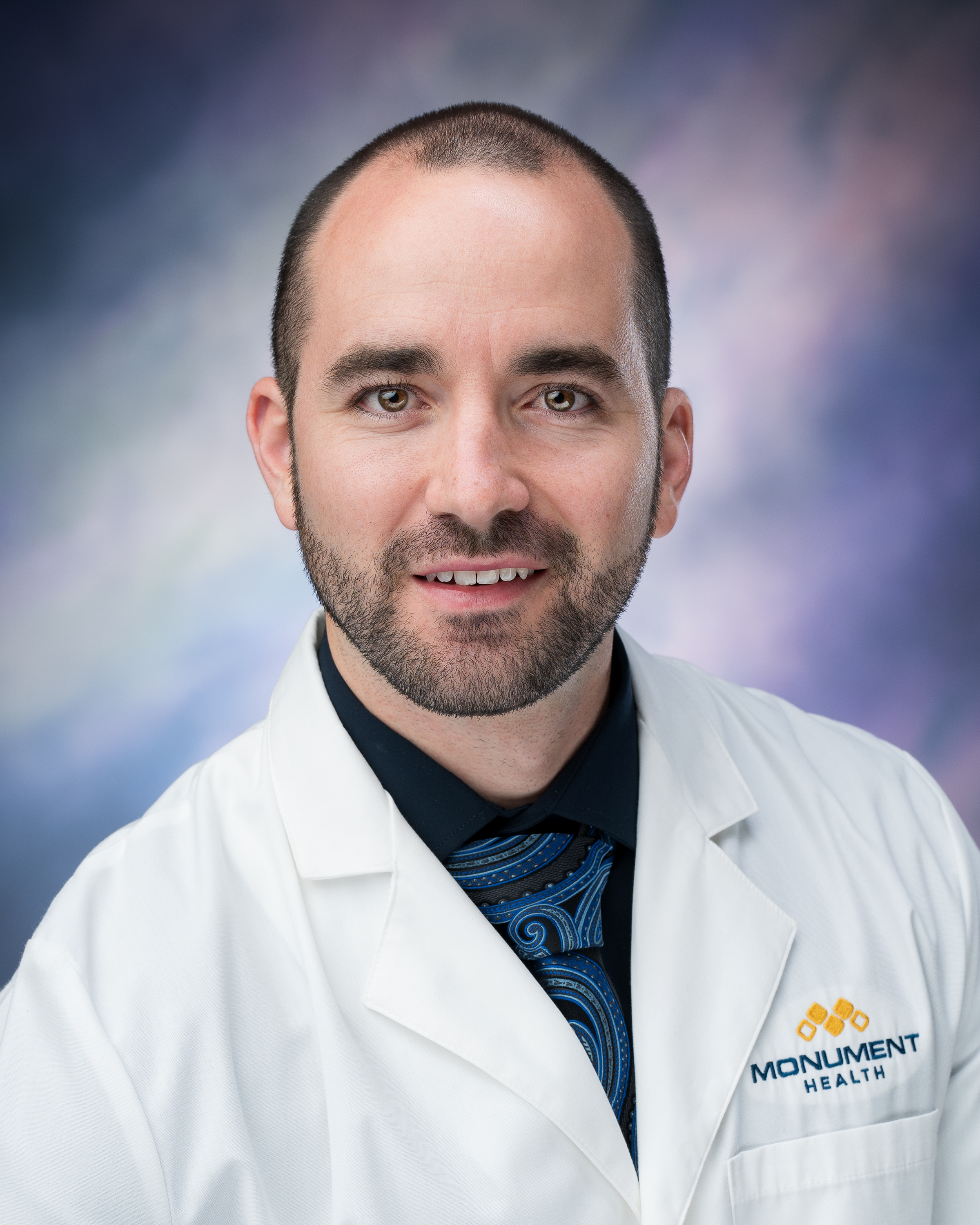
Dr. David Woodard is an orthopedic surgeon specializing in treating injuries in athletes and active individuals at Monument Health Orthopedics & Specialty Hospital. He specializes in injuries and pain in the elbows, shoulders, knees and hips with training in minimally invasive techniques that focus on joint preservation and shoulder arthroplasty.
After a conservative approach which included physical therapy, modified activities, stretching and strengthening, and anti-inflammatory injections failed to bring Alison lasting relief, Dr. Woodard determined that arthroscopic surgery would offer her the best chance for full recovery.
“All those things did not provide Alison with any significant long term pain relief,” said Dr. Woodard of the nonoperative management. “The activities she was doing became less and less and her pain became more and more.”
Advanced technology at MHOSH allowed Dr. Woodard to not only repair Alison’s torn labrum, but also perform a femoroplasty, a reshaping of the neck of the femur to create a smoother, more natural ball-and-socket fit.
“At MHOSH, we have technology that supports precise preoperative planning. We can get 3D analysis of the hip, which gives us a weather map of the femoral neck to show exactly where the abnormal bone needs to be removed,” he said. “In addition to repairing the labrum arthroscopically, we also adjusted the shape of her hip joint to restore normal range of motion and eliminate pain.”
The surgery was a success, though the biggest challenge was keeping Alison from rushing back into her regular routines. Just weeks after her Feb. 17, 2025, procedure, she was eager to resume her cheerleading jumps, splits and aerial stunts.
“She was already feeling better days after the surgery. That’s how I knew she would do really well. The only challenge was slowing her down,” said Dr. Woodard.
Alison admitted that she differed from Dr. Woodard on the recovery timeline and may have “pushed some buttons.”
Six weeks after surgery, Alison was back as a horseback trail guide. By May, she returned to aerial work, focusing on her upper body strength. In August, she was performing again with Amber Sky Aerial Arts, just in time to prepare for a competition in Sioux Falls and was back on the sidelines cheering for Spearfish High School.
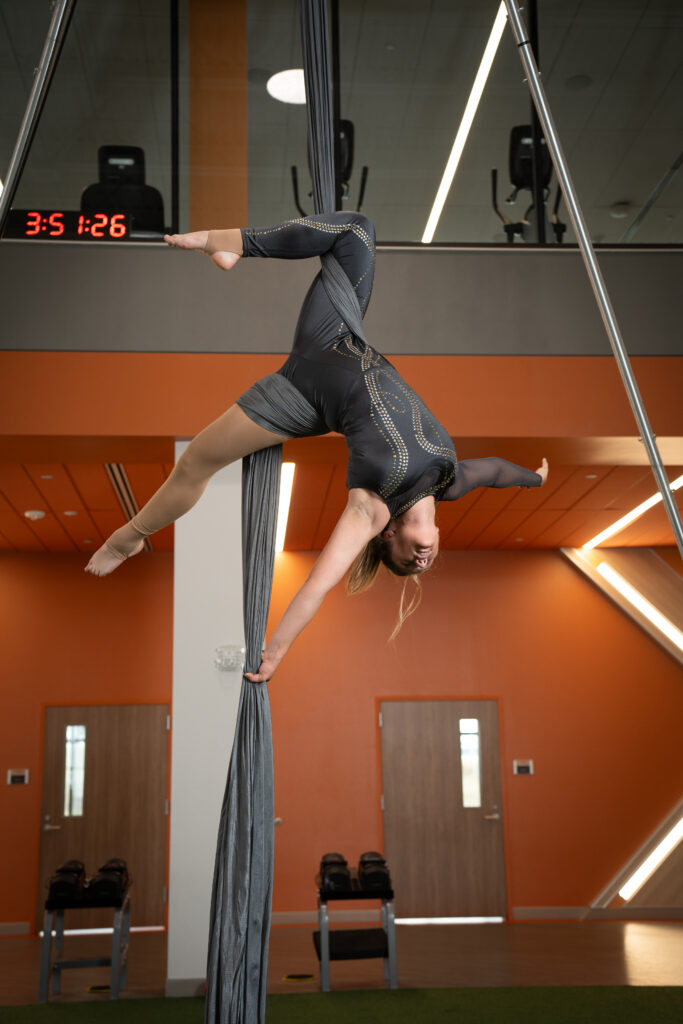
“When I officially came back, I could tell I had a lot more strength than I normally do and I think I have more range of motion than I did before.”
For other athletes facing recovery after injury, Alison advises to be patient and positive. “Work with your coaches to find alternative workouts, easy back in slowly, and don’t hate your doctor for telling you ‘no,’” she laughed.
Her experience not only strengthened her body but also broadened her outlook on a perspective future. “Having my surgery also really opened me up to physical therapy as a career. It’s not something I looked at before I needed it.”
For Dr. Woodard, seeing Alison and other athletes back on the field, track or performing stunts suspended 25 feet in the air, free from pain, is what makes the work deeply rewarding.
“What I really enjoy most about being a sports surgeon is that I am actually giving people back the ability to experience the things they enjoy most about life,” he said. “The moment when I can tell the athlete is no longer thinking about their injury and are back to the part of their life that they missed most when they were hurt – that’s the best part of my job.”