
For their semester project, South Dakota Mines Assistant Professor of Biomedical Engineering Tugba Ozdemir challenged her students to identify and provide product solutions to common problems associated with wound care.
The twist, though, was that the students had to pitch their ideas to a panel of five judges. Taking the example of the TV game show “Shark Tank,” and using fake money, the judges then weighed whether or not they wanted to invest in the products.
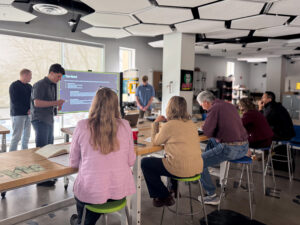
These Wound Shark Presentations were held in the Maker Space inside Devereaux Library on S.D. Mines Campus. Sarah Mollman of SDSU College of Nursing, Jim Quinn of Quinn Construction, Dr. Jennifer Leberknight from S.D. Mines, Tung Nguyen, an Engineer/Consultant and our own Jessica Hart, CNP, Sleep Center and Wound Care in Rapid City served as the Sharks.
In teams of three, the students pitched their products, which included such innovations as dressing for burns and hypothermia and a detection device that senses infections at wound sites.
The students presented the specifics of the scientific basis of their products, the funding required for initial valuation and the potential market for the final product. The pitches also included profit estimates, roll-out strategies and timelines to significant development milestones. Much like the TV show, the Sharks asked questions then either offered to fund the project for a percentage of profits or stood pat. There followed negotiations with the students, who ultimately either accepted or rejected the offers.
“Community partnership is exceedingly important between industry and our health care system,” said Jessica. “Also, it helps to foster development of new ideas. There are so many things that I can take away as well and put into practice that I learned from these students. I have learned so much in just two years about what they go through to create products that we use every day.”
Jessica had prior experience with the students in an advisory role. She’d given them lectures on wound healing and what happens when wounds don’t heal. The students also came into Wound Care to spend an hour shadowing Caregivers to witness real life situations. All of this was to help the students understand what they were dealing with, according to Jessica.
“I really enjoy being with these students. They’re very on top of the game. I’m very impressed, always, by their ideas, their presentations, their level of understanding of things,” Jessica said. “I do not come from an engineering perspective. They also have quite a science background, so they’re able to put their microbiology together along with a little bit of clinical observation. And I just see the lights turn on.”
Some of the innovations were still only concepts, some of them had prototypes. And, even though they were just ideas for a college class, that doesn’t mean they couldn’t one day be actual products.
“Wound Care is one of the fastest growing specialties within health care. It’s also one of the most researched,” said Jessica. “Every year there are innovative ideas and products to solve problems that we haven’t been able to solve yet, so these products could certainly make their way into the marketplace.”
Story by Kory Lanphear
Photos by various